
[Student IDEAS] by Michelle Diaz & Marina Pellet - Master in Management at ESSEC Business School & Master in Data Sciences & Business Analytics at ESSEC Business School & CentraleSupélec
This article will look into the definition of the attention economy, what it entails, how it affects society at large, and why everyone should care; particularly in this new age of exponential and wide-use of artificial intelligence. Moreover, it will guide a possible way forward for citizens to deal with the attention economy, and underline the sway that users have over the tech services that govern our daily lives.
---
Economics is the study of scarcity;1 from wealth, food, energy, or even time. Otherwise known as human attention. The latter example might seem odd. Nevertheless, human attention is in fact a scarce resource. One that is intangible, but is nevertheless invaluable. After all, we only have access to 24 hours a day, out of which, one third we spend sleeping.
Every time we decide to focus our attention on a particular task, our entire cognitive resources are directed to that one task at the expense of others. In economic terms, spending time focusing our attention on a specific aspect of our environment carries an opportunity cost, or the foregone benefit that would have been derived from another, unchosen task. Just like money, one can also exchange attention, as we usually allocate our attention to tasks in order to gain a benefit, whether it is learning a new topic, getting remunerated at work, taking care of our health and body through exercise, or releasing serotonin, endorphin or oxytocin by engaging in a pleasurable activity. This small analysis gives the idiom ‘paying attention’ all its economical depth.
In this context, the attention economy, a term first coined by psychologist, economist, and Nobel Laureate Herbert A. Simon in 1971, can be defined as the mechanisms and strategies put in place to captivate the scarce resource that is human brain time to generate revenue.2 Everytime you pass by an advertising board in the street that successfully catches your attention, every time your eyes deviate from the news article you’re reading to that newest trendy shoes ad on the side of the webpage, or every time Instagram shows you a ‘suggested’ video that you actually watch, you are participating in the attention economy.
As most people can guess, the stakeholders after your attention are predominantly technology, entertainment, & social media companies, in historical accordance with the traditional media players: the press, newspapers, TV channels, & radio. All, to some extent, are on the conquest of retaining human attention. But in our modern times, social media platforms have brought a new dimension to capturing human attention. Indeed, as they do not produce any content themselves, their sole purpose and main revenue stream is to sell available brain time to advertisers.
In essence, there are two types of companies after your attention, the subscription-based model and the advertising-based model. In the first category, we have the media and entertainment industry, like the streaming companies: Netflix, Disney+, Hulu, for example. In the second category, are the social media platforms like Facebook, Instagram, and Tiktok. Both rely on consumers to actively and consistently use the services provided, which results in tactics to achieve said result, a feat these companies have increasingly managed to do.3
To sustain the audience or the consumer’s attention, companies need to serve them exactly the content they want. In the past, companies did this by conducting market research, adhering to what the market deemed popular. Today, this market research is bolstered by technology’s improved capacity to collect more fine-grained, instantaneous, and relevant data on human behaviour through the various digital platforms people use. Given the emergence of artificial intelligence (AI), all this data can now be fed into machine learning powered algorithms that use relevant computational techniques to better understand and predict human preferences.
Nowadays companies are able to curate content in unprecedented ways. And over the years, platforms have successfully leveraged big data and AI to maximise the time people spend online. By collecting data every time we like, comment, share, rewatch, scroll and post, social media platforms are able to construct extremely detailed profiles of their users and their preferences. Such profiles are built through sentiment analysis which is backed by Natural Language Processing (NLP), the branch of computer science—and more specifically, a technique in AI which gives computers the ability to understand text and spoken words in much the same way human beings can.4
For example, Facebook can classify as much as 52,000 features on each of its users to simultaneously curate the most addictive feed, and target the most appropriate ads to maximise revenue.5 These features can involve pages followed and ads clicked amongst other things. In essence, AI has become the main strategy used by companies to capture the scarce resource that is human attention and further generate revenue.
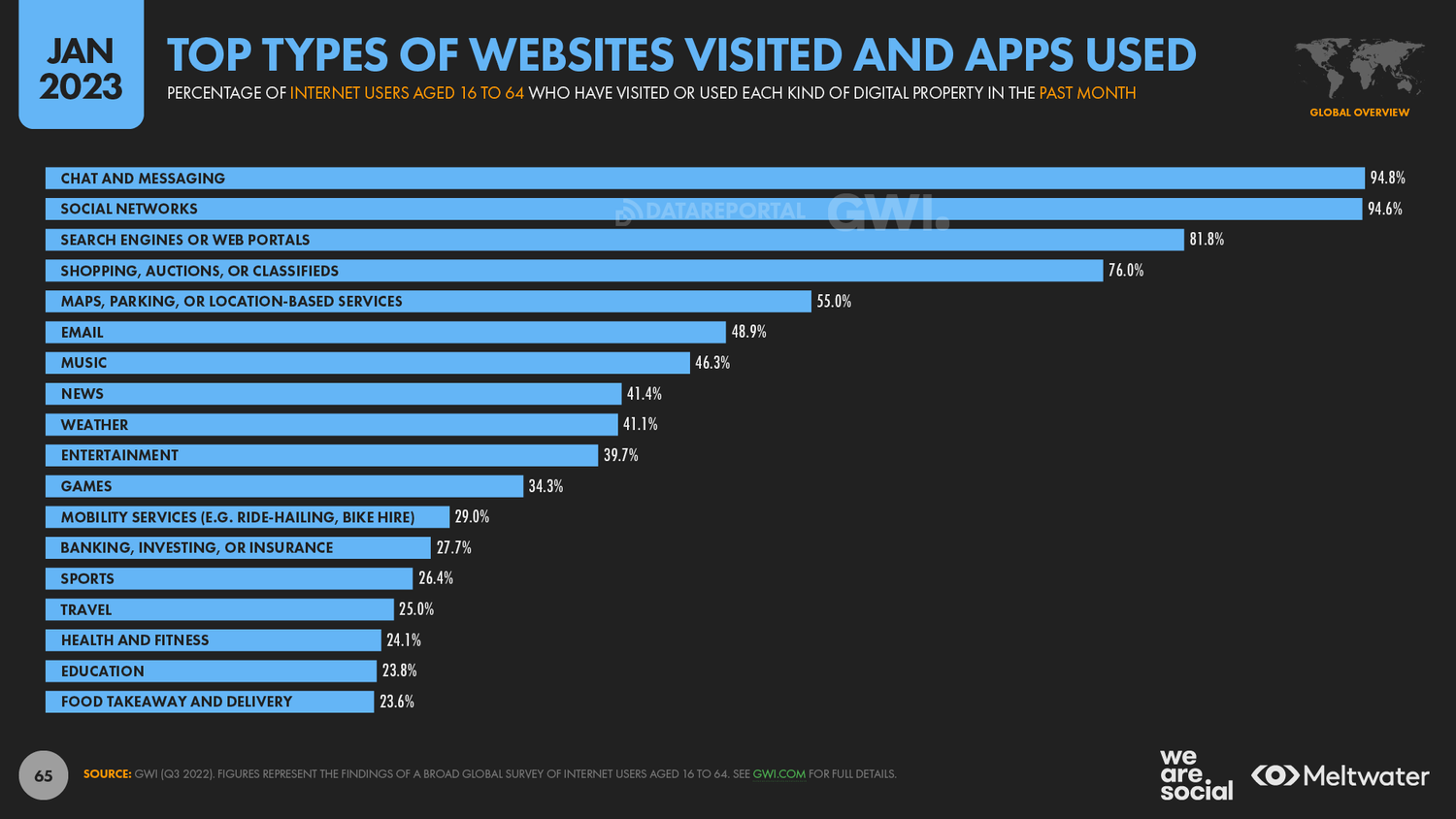
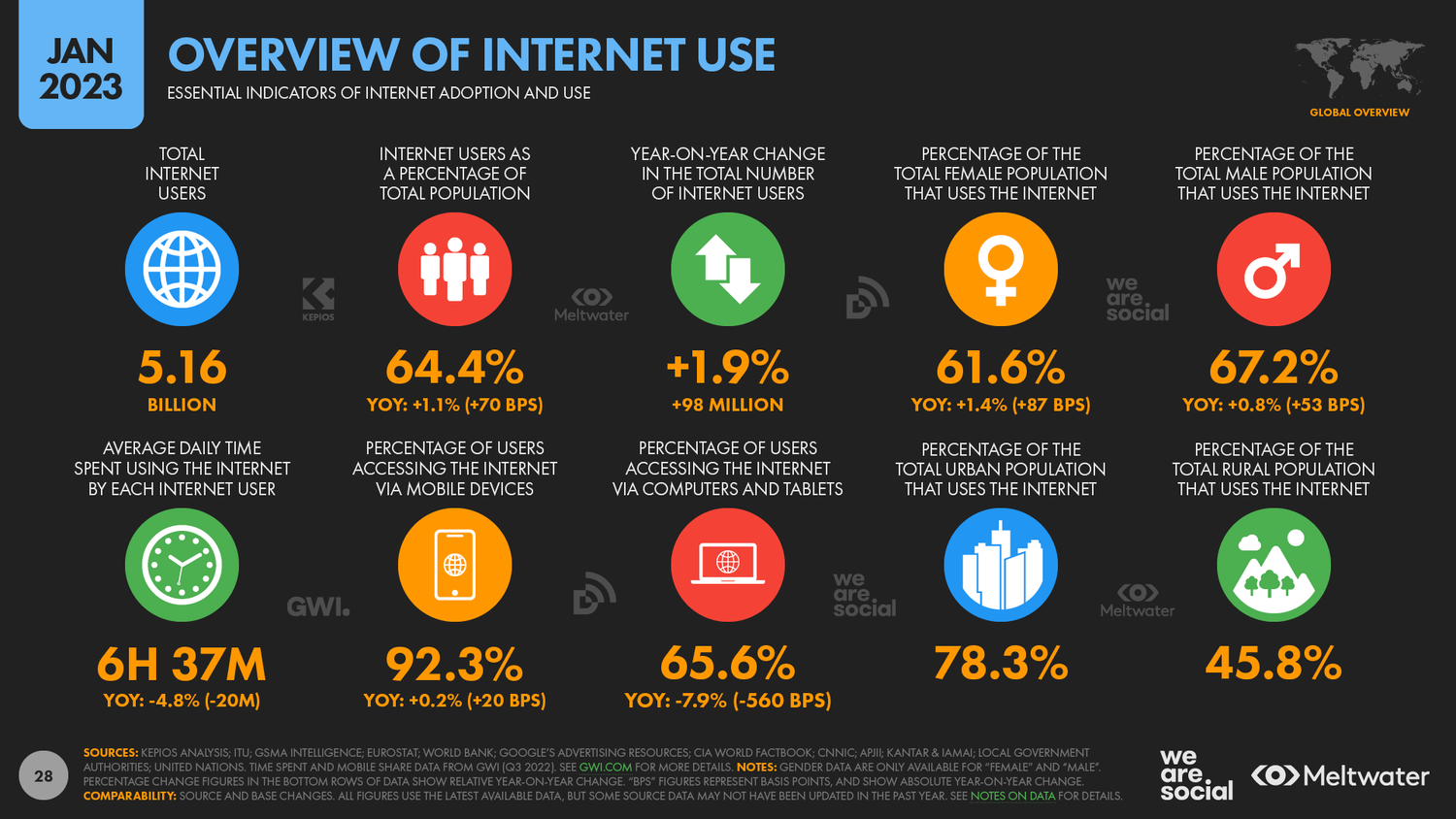
According to Dataportal’s 2023 digital report on the global usage of the internet and digital services, our lives have become inextricably linked with technology, with over 5 billion internet users all over the globe:6
It is imperative that we understand the repercussions that technology plays in our lives. Indeed, some of the digital services we use play on some of our deepest, most basic, and evolutionary impulses; to the detriment of our health and general well-being. By effectively distilling the audience’s desire through the use of AI, companies are now, more than ever, able to capitalise, take advantage of, and directly or indirectly negatively impact human psychology. Below are apt samples of said influences:

Consider social media platforms and the long-established relationship between their use and body image. The existence of highly perfected, curated, and edited images of influencers on social media like Instagram may bring about issues of mental health risks such as appearance-related concerns, eating disorders, and body dysmorphia. These issues predate the application of AI in these platforms, even when feeds were only occupied by posts of accounts you follow. But now, with the use of AI, it means that even when users make the active choice to avoid certain types of accounts or content, they may be unable to do so, especially as the ‘suggested’ posts in feeds take up a more important space than before.7 Consequently, AI further exacerbates the problem. What’s worse is that psychology has proven that even the things we particularly dislike or fear prove to be points of interest, akin to the desire of watching horror movies, even though doing so might give one nightmares.8
How many times have you scrolled through the social media feed of someone you do not particularly like? Might you have done something more productive, or at the very least, less emotionally taxing instead?

On the other hand, having an algorithm cater to specific interests can be viewed as a good thing in that users are able to easily discover more content that they will enjoy, as is the case for entertainment platforms with AI-powered recommendation systems. But the increased personalisation comes with caveats like polarisation and digital escapism.
Polarisation refers to the tendency of social media users to fall into a vacuum of content that only reinforces their view of the world, thus giving them a biased and distorted view of reality.9 Such is the case with recommended content on platforms, wherein “social media robots, more commonly known as “bots,” are becoming a formative tool of online radicalization.”10 It is easy to draw the line from these bots to the rampant polarisation online that has instigated many incidents of real-life violence owing to the spread of disinformation, conspiracy theories, and radical viewpoints. Such is the case with the 2017 Rohingya Massacre in Myanmar, wherein people were “killed, tortured, raped, and displaced in the thousands as part of the Myanmar security forces’ campaign of ethnic cleansing. In the months and years leading up to the atrocities, Facebook’s algorithms were intensifying a storm of hatred against the Rohingya which contributed to real-world violence.” – Agnès Callamard, Amnesty International’s Secretary General.11 Indeed, researchers have predicted that the dawn of effective and persuasive generative AI will further exacerbate the problem.12
Secondly, we have digital escapism, which refers to the use of digital technology and the internet as a means to escape the realities of our lives. This new trend of digital escapism, in addition to private spaces in the virtual world,13 has been further exacerbated by AI. The act of escaping itself may not be all that bad, after all, we all need a reprieve from time to time. However, research has shown that excessive escape to the digital world has given rise to psychological disorders. It brings forth “Internet Disorder syndrome” which invites stress, depression, deviation from one's own goal, sleeplessness and anxiety.14
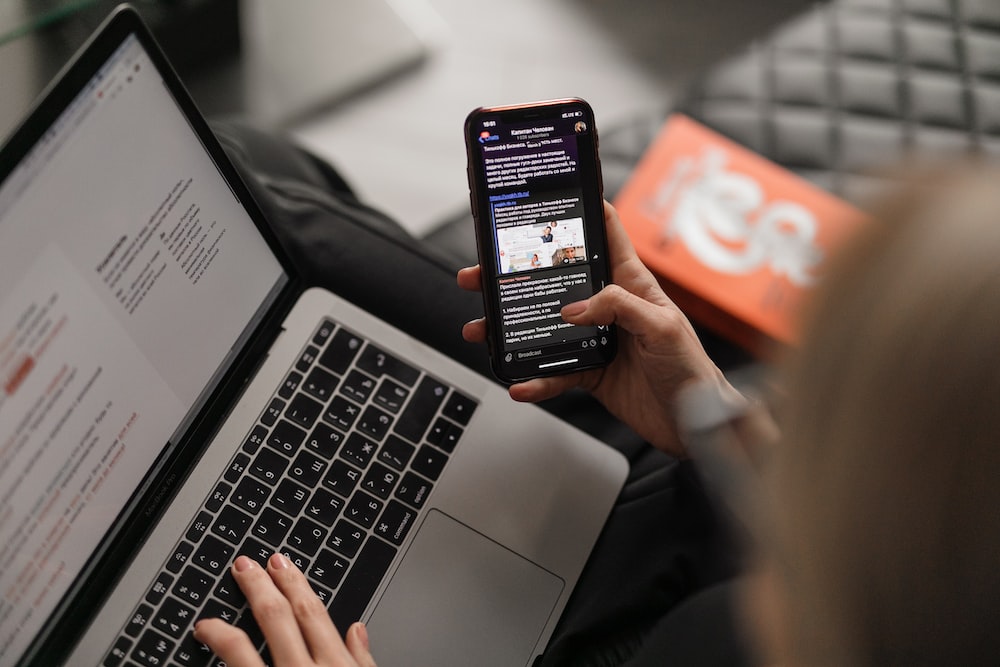
According to the Merriam Webster Dictionary, attention span is defined as “the length of time during which one (such as an individual or a group) is able to concentrate or remain interested.”15 Historically, scientists hypothesise that having a shorter attention span served humans well, in that it allowed us to quickly monitor for danger. However, in today’s digital era, humanity’s shorter attention span can be detrimental. In fact, the US National Center for Biotechnology Information claims that the average human attention span has dropped from 12 to 8 seconds between 2000 and 2013, just one second below that of a goldfish, which is why the phenomena of a decreasing ability to concentrate on a task was called the “Goldfish Effect”. Social media is often held as most accountable for this drop in our attention span.
Now, consider the push through notifications on our phones from these platforms. Each ping conditions us to reach for our phones. So much so that even without that ping, people find themselves reaching for their phones anyway; what researchers have come to call phantom phone signals.16 Given the boost that AI gives to social media and entertainment companies after our attention, it is imperative that society at large understands how detrimental a decrease in one’s attention span can be for their lives. The inability to focus can decrease productivity at work, make it harder to complete personal chores, and at their very worst, impact personal relationships.17
How many times have you found yourself annoyed with someone using their phone while you’re relaying a story to them? How many times have you been that person? Do we not owe the people we care about our absolute attention? Do we not want that for ourselves? Unfortunately, without outsized intervention, it is an uphill battle for most users.

The mechanism behind social media and entertainment platforms have not always used AI to construct their various newsfeeds. In other words, while the feeds could be addictive, they were not always powered by AI. At one point, it was true to its name; it was simply a feed of the content posted by people you followed. Not a curated feed designed to explicitly keep you online for as long as possible.18 The change into algorithmic feeds came into effect largely around 2009, with Facebook leading the way by prioritising popular posts.19 But the mission was always to retain users on the platforms for as long as possible, and the use of AI is simply the most powerful way of currently doing so.
But big tech is aware of the backlash, and has subsequently introduced measures that some may call ways to curb the excessive use of their services. And the release of Netflix’s documentary on the attention economy: The Social Dilemma, has made people more aware of the issue.20 Meanwhile, Apple and other technology device manufacturers have introduced app timers to help users better manage their time and curb the hours they spend in front of a screen. And child settings can be applied on these devices to safeguard internet use, excluding certain websites and searches that may be bad for children.
Furthermore, some companies have even implemented what can be called more concrete measures like Alphabet and Meta. Indeed Google Chrome has been on course to phase out third-party cookies since 2021, with 1% of cookies being phased out in early 2024.21 Moreover, Meta has increasingly over the years made privacy controls more accessible for its users; users now have the option of tweaking what data, if any, is shared with the advertisers.22
But how effective are these efforts really? Might we even call these interventions? Or just ways for these companies to seemingly address customer concern, and in effect continuously sell their products? Or worse yet, might these tweaks just be another push to further sell said products, as an appeal to concerned consumers? After all, as anyone with a smartphone knows, you can always just extend the timer. Does it not, in some way, feel like the impetus of responsibility is being pushed onto users? Do individual users actually stand a chance when a former Google designer, Tristan Harris compares the level of addiction to a "Vegas slot machine" as users "check their phones hoping that they have a notification, as if they are pulling the lever of a slot machine hoping they hit the jackpot"?23
As the business models of social media and streaming companies continue to largely be based on the attainment and maintenance of people’s attention, it follows that society at large cannot expect intervention to primarily come from companies themselves. From a business and profit driven perspective, these companies cannot be effectively counted upon to match their interventions to reduce screen time to healthier levels. Particularly, if said levels fall below what is required to continue rapid company growth and appease shareholders.

Currently, the European Union has led the way when it comes to regulation of big tech companies. For example, through the recent Digital Services Act (DSA), regulating illegal content, transparent advertising, and disinformation online, the Digital Market Act (DMA), ensuring a higher degree of competition in the European Digital Markets by preventing the largest digital players (defined as Gatekeepers) from abusing their market position and power by enabling smaller companies to enter the market on a more level playing field. And lastly, albeit the most known, the General Data Protection Regulation (EU), a regulation on privacy and data protection in Europe, adopted in April 2016 and became enforceable in May 2018.
The GDPR remains one of the core regulations on privacy and data protection in Europe, and arguably one of the biggest tech regulations so far, which has sparked similar regulations across the globe.24 In 2023, the EU AI Act, the first regulation on the use of AI was adopted by the parliament, with talks to begin with EU countries in the Council on the final form of the law underway.25 Outside Europe, and given the testimony of Sam Altman, the OpenAI chief executive on the repercussions of AI earlier this year in Congress, multiple actors within the US government are jostling to regulate AI.26 In spite of all this and given the historical speed at which regulation comes into play around big tech, it is imperative that users of digital services and social media platforms refrain from being complacent.

As individual users of these entertainment and social media platforms, what is there to do? How might we shift the powers that be? Do we have that ability? The Social Dilemma was released in 2020, and three years later, here is an article calling your attention yet again to the attention economy. Outlook is rather grim. But users can call for better behaviour from big tech — it may not seem like much, but calling attention to the issue, with a big enough mic, and a coordinated enough mass, might speed up the process of accountability. Indeed, let’s not forget that consumers create demand and have the power to shift the actions of big companies through their choices.
Just like we have seen the rise in demand for more sustainable and ethical products, we can hope to see a mass gathering and ask for anthropologically beneficial tech products that promote learning, collaboration, and solidarity; stepping away from the negative effects we’ve outlined. Much like the environmentalist movement, where people make conscious decisions to fly less, buy local groceries, and support circular brands, online users can shift to digital minimalism. By using alternative internet services like Duckduckgo, Vivaldi, or Ecosia, users are able to limit data collection from big tech to some degree, reduce their time online, and help the planet along the way.
Additionally, the decentralisation movement or Web 3.0, which is an alternative way for the internet to work could be something that users might think to further support. In essence, the decentralisation of the internet means widely distributing the control of online information, interactions, and experience of users. Such a system would see the reorganisation of the internet into a peer-to-peer infrastructure as opposed to the current centralization of data amongst hosting services.27 More concretely, this would mean that large amounts of data might no longer be concentrated in the hands of those that provide the services we use, like Alphabet, Meta, and Apple.
But for now, reading this article has hopefully made you more aware of how your phone, that you bought with your hard-earned money, might be serving big tech more than it serves you. The first step to addressing any problematic issue is awareness; we all need to pay a bit more attention to the consequences of our time online. Remember, the attention economy is not an immovable object, met with the right amount of pressure, it can change. Like any business model. Given that, shall we turn the tide and assure your phone serves you first? Sharing this article is a start.
[1] https://www.merriam-webster.com/dictionary/economics
[2] https://econreview.berkeley.edu/paying-attention-the-attention-economy/
[3] https://datareportal.com/reports/digital-2023-global-overview-report
[4] https://www.mdpi.com/1999-4893/16/6/271
[6] https://datareportal.com/reports/digital-2023-global-overview-report
[7] https://www.sciencedirect.com/science/article/abs/pii/S1740144522000638
[8] https://www.psychologytoday.com/us/blog/how-think-neandertal/202110/why-we-enjoy-horror-films
[9] https://www.sciencedirect.com/science/article/abs/pii/S0040162522004632
[10] https://link.springer.com/chapter/10.1007/978-3-031-22552-9_4
[11] https://www.amnesty.org/en/latest/news/2022/09/myanmar-facebooks-systems-promoted-violence-against-rohingya-meta-owes-reparations-new-report/
[12] https://www.nytimes.com/2023/02/08/technology/ai-chatbots-disinformation.html
[13] [14] https://www.researchgate.net/publication/344640651_Digital_Escapism
[15] https://www.merriam-webster.com/dictionary/attention%20span
[16] [17] https://www.mindbodygreen.com/articles/how-to-increase-attention-span
[18] https://www.nytimes.com/2016/03/16/technology/instagram-feed.html
[19] https://wallaroomedia.com/facebook-newsfeed-algorithm-history/
[20] https://en.wikipedia.org/wiki/The_Social_Dilemma
[22] https://www.facebook.com/privacy/center
[23] https://launchpad.syr.edu/3-things-we-learned-about-social-media-from-netflixs-the-social-dilemma/
[24] https://www.statista.com/topics/9651/tech-regulations-in-europe/#topicOverview
[26] https://hbr.org/2023/05/who-is-going-to-regulate-ai
[27] https://ischool.syr.edu/decentralized-web-experts/
[ESSEC Knowledge] by Xavier Pavie - Professor at ESSEC Business School
The interconnection between philosophy and business is not entirely clear, and it is important to remember that business must serve philosophy, not the other way around. The key point is that we want a wiser, better world, and business is a tool we can use.
To better understand, look at stoicism, a kind of philosophy.
While Stoicism is an ontological philosophy, it is also famous for its wisdom, summarized with Epictetus' Talks. Epictetus evokes the work of the soul by separating the functions of the soul into three topoi. The first function is the discipline of desire: to renounce desiring what does not depend on us. The second function relates to habits and action: not to let oneself be carried away by disordered desires that harm one's behavior, but to show self-control. The third corresponds to the proper use of representations; it is the discipline of agreement, or being genuine in how we use our thoughts and speech in our judgment.
The presentation of the three topoi highlights that it seems impossible to think of stoicism without a practical application. By looking at the Stoic masters, we see that they are heavily involved in daily life and in business. Zeno of Elea, founder of Stoicism, inherited a fortune from his father. Seneca was a magistrate, a lender, a teacher, and a tutor. Marcus Aurelius was emperor. Cicero was a statesman, a pro bono lawyer, a landlord, and a businessman.
[To read the full article please follow this link.]
[ESSEC Knowledge] by Frank K.Y. Chan - Professor at ESSEC Business School
Internet privacy stories in recent years, like the Cambridge Analytica scandal and concerns over the new WhatsApp privacy policy, have sensitized us to the risk of putting our lives online. This affects people in different ways: some will up their privacy settings, some will stop using social media or shopping online, some won’t change anything at all. Frank Chan (ESSEC Business School) and his colleagues Weiyin Hong (Hong Kong University of Science and Technology) and James Thong (Hong Kong University of Science and Technology) explored the drivers and inhibitors of Internet privacy concern in their recent paper in the Journal of Business Ethics to uncover how people form their relationship to Internet privacy, finding that these factors fall into four dimensions: environmental, individual, information management, and interaction management.
What impacts our relationship to Internet privacy?
To conceptualize their model, the researchers used multidimensional development theory, which proposes that privacy situations can be classified using the four dimensions described above, since someone’s privacy concerns will stem from a combination of their environment, their experience, and their interaction with other implicated parties. This provides a thorough understanding of how our relationship to Internet privacy develops, and why it presents differently for different people.
[To read the full article please follow this link.]
Institute for AI & Business conference on “How to build a democratic awareness of AI?” was held on March 7. Thanks to the contributions of Laurent Bibard, Gontran Peubez, Patrick Albert, Jean-Gabriel Ganascia, Nicolas Sabouret and Florence G'SELL, the participants had the opportunity to engage in a fruitful conversation addressing various aspects of AI - its ethics, legal considerations, citizen dimension... What emerged was that defining a space of democratic awareness in AI requires a comprehensive and collaborative approach that involves all stakeholders - including scientists, policymakers, businesses, and civil society. It also requires an awareness of the opportunities and challenges of AI, and a willingness to work together to ensure ethical and responsible use of the technology.
A special thanks to ESSEC DSBA students Paul Bédier and Marina Pellet who moderated the discussion and provided enlightening insights.
And thank you to all the participants who showed a deep interest in the topics discussed.
To watch the replay (in French):
An article that looks into the relationship between AI and Human creativity. By defining what makes creativity distinctively human, tracing the ways in which AI is a means to further creativity, and examining how AI may someday compete with human creativity.
Nothing seems more human than creativity—the trait that underpins human innovation, from the arts to the sciences, and pretty much everything in between. According to the Cambridge dictionary, creativity is defined as “the ability to produce original and unusual ideas, or to make something new or imaginative.” However, physicists regard equations not only for their originality, merit, or consequence, but also for their elegance. On the way in which an equation can embody a truth. Ingenuity is defined not only by the solution-like quality it may have, but by the subjective emotion it can elicit.
One of the greatest love stories in medicine is that between William Steward Halsted, considered to be the father of American surgery, and Caroline Hampton Halsted, his scrub nurse. The story goes that around the winter of the 1890s, Caroline complained of dermatitis on her hands and arms due to the solutions used in the operating room. Given William’s regard for Caroline, he made a request to the Goodyear Rubber Company to make thin gloves as an experiment. And these became the rubber operating gloves used today, thin and reliable. Coupled with hand hygiene, it significantly reduced infections and deaths in the operating room. A simple innovation borne out of necessity and concern – a creative and consequential solution sparked by an understanding of context and the human need to alleviate emotional turmoil.
As it stands, artificial intelligence remains incapable of the emotion that makes creativity human. It can neither comment on the elegance of Einstein’s theory of special relativity nor attribute any solution it proffers as stemming from pain, devotion, or the desire to simply evoke emotion. But ask any AI specialist today, and they will heartily tell you that AI already has a relationship with creativity, one that is beneficial to both parties and largely in service of human creativity. Not quite out to compete with human creativity. Not yet anyway.
Over the years, creativity has been defined in multiple ways. All with the explicit aim of capturing and accounting for every facet of the concept. From breaking it down into different types, to analysing its consequences, and clearly defining the common thread of what makes a certain idea, behaviour, or endeavour creative.
One of the most known and cited definitions was given by Simonton in 2012. It follows the criterion used by the United States Patent Office to determine whether an invention can come under patent protection. An idea or invention must be original, useful, and surprising to achieve either full, or partial patent protection. Another famous definition was used by Boden in 1998, in her article on creativity and its connection with artificial intelligence. According to her, there are three types of creativity, all involving the generation of novel ideas, and each type is capable of bringing about the emotion of surprise:
By categorising creativity in these three ways, Boden was able to evaluate computer models in accordance with the categories. She additionally differentiated creative endeavours as either being:
In this way, computer models could be built to mimic the process by which creative ideas could be generated.
However, the key component of whether an idea can be considered creatively successful is the context in which it is made. Great poetry does not simply follow a good rhyming scheme but comments on the human condition in a way that resonates with people—which is to say, artificial intelligence when applied to creativity must be directed. For instance, in the fields of visual art or music composition, AI can be programmed to produce something that is transformational, in that it can create something new and unexpected and be deemed creative. But whether it can be considered a work of art that is largely admired by society is another question. It is imperative for AI to understand, evaluate, and adjust accordingly to contextual cues to compete with this innately human aspect of creativity.
Artificial neural networks (ANN), a set of networks that are inspired by the human brain, try to address this question of recognition. ANN emulates and uses a reduced set of frameworks from biological neural systems. More specifically, these models imitate the electrical activity of the human brain and nervous system. The ANN models are neurons in a complex and nonlinear form. The neurons are connected to each other by weighted links. There is a supervised procedure that comprises three layers: input, hidden, and output. Now, instead of simply asking the algorithm to create something novel and unexpected, it uses an algorithm designed in accordance with the human brain, with narrowed-down data sets chosen by human beings.
For example, in music, as in several creative fields, there exist melodies and patterns that can influence human emotions in certain ways. A study done in China using AI capitalizes on this fact. Fundamentally, music has three distinct parts: time, pitch, and texture. Using machine learning and deep learning paired with facial recognition and music, they created a model that could assess the effects of certain types of music on a customer’s behaviour. Essentially, they tracked if the music played would affect how long a customer would stay in a certain store. And it did. It confirmed that digital transformation brought about by AI could be used as an environmental stimulus to affect customer behaviour.
All this to say that one can train a model using a data set of the most known and beloved musical pieces across the centuries and it will manage to render melodies that will resonate with human beings. In this way, the creativity involved is combinational, exploratory, and historical.
It is almost akin to Doctor Halsted bringing about the invention of thin medical gloves, wherein the data provided to the algorithm is the context of the good doctor’s concern for his eventual wife, thus emphasising the human component in the creative endeavour. Essentially, AI can create works of art or demonstrate creativity by having access to data that provides human preferences. This type of work effectively improves upon human creativity, actively resulting in something useful like knowing the type of music to play to encourage customers to stay longer at a certain shop.
Another aspect of creativity is the combination of transformational and psychological, a creation that manages to balance surprise with societal acceptance and be new to the algorithm itself. In this regard, there have also been advances. An astounding example would be the work of computer scientist Ahmed Elgammal at Rutgers University in 2017. He used generative adversarial networks (GAN) that can do more than recognize existing images of objects, but also generate novel images, simply by inverting the "image coding/recognition" procedure. He developed a new GAN known as the Artificial Intelligence Creative Adversarial Network (AICAN) which was able to not only judge its own work, but also look for styles that have yet to exist. In essence, it could create.
The key part of this endeavour was that he trained the algorithm on a database of over 80,000 images from Western art in the periods between 1400 and 2000. The machine produced its own style by knowing about the styles that already existed in that period. Now for the judgement: the AICAN images were shown at the 2016 Basel fair in competition with works by human artists, and the judges preferred the AICAN images. The judges collectively regarded the images as creative. The case to be made, however, is that the newly produced AICAN images followed the style of heavy abstraction, which follows in line with the history of art.
As such, an argument could be made that in this instance, the artwork fell just in line with the creative categories of transformational and psychological, given the domain of western art paintings. Regardless, the results were impressive and indicate a positive for AI in creativity. But while it is brilliant that AI can create something entirely new and manage to adhere to human preferences, it remains that there was a human touch to the data: the algorithm was created by humans, and trained on a data set curated by humans.
Hence, it misses the purpose born of an artist’s context that is usually involved in the production of art. Moreover, western art is a domain with a wider tolerance for astonishment and abstraction far removed from human experience. A domain wherein the purpose of art is allowed to be less important than its ability to elicit an imaginative response from humans.
The opposite is required for great stories, the narratives and writing that eventually become a part of the literary and cinematic canon need to be attached to the human experience. Indeed, for stories to work, they must go beyond the technical elegance of the writing, they must speak to some sort of human truth. Even the most fantastical of stories, like the Harry Potter series or the Lord of the Rings, revolve around certain universal truths: the experience of adolescence and the ethical conundrum of what is good or bad. In essence, great stories must have a narrative that humans can identify with.
In this realm, there are two use cases of AI that have garnered a lot of attention.
Most commonly used across different storytelling mediums. For instance, the incorporation of digital storytelling in television, film, gaming, and the entertainment industry fall under this category. In essence, these AI interventions are to be incorporated into the genre of Choose Your Own Adventure (CYOA), a type of story that gives its audience a hand in the direction of the narrative.
A familiar example would be Netflix’s Bandersnatch, a standalone episode of the popular Black Mirror series, wherein the audience is presented with different choices at different points throughout the narrative that affect the ending.
The use of AI in this genre is through narrative generation systems, wherein the system responds to user input and allows for interactivity. The difference between the traditional application of CYOA is that, previously, the author had to create the different predetermined storylines upon writing the story. But the use of AI, will allow computational algorithms to process and produce audiovisual media more seamlessly in service of the author’s vision.
This will allow for a wider variety of endings with different nuances in place—making the arc of the storyline more diverse and less predictable for the viewers.
This second approach is in line with the combination of transformational and psychological creativity; these forms of AI try to be content creators themselves. Such works have largely been experimental and academic, but some projects have made it into the public domain.
Some examples include projects like Ross Goodwin and Oscar Sharpe’s AI screenwriter, along with Botnik Studios AI. The stories these projects have developed are far from the coherent, emotional, and storytelling standards of the commercial entertainment industry.
But like AICAN images, they have managed to intrigue enough to garner an audience. Perhaps, with time, these stories will eventually evolve from curious, abstract, and compelling in their strangeness, to emotionally moving narratives that account for human context and emotion.
Distilled, the relationship between AI and creativity can be categorised in two ways: the empowerment of human creativity and the pursuit of a creativity that can pass as human. Currently, AI has made more strides in the first category, working more so in partnership and with the guidance of human creativity to achieve new heights.
The latter category which proffers AI as having the ability to compete with human creativity by correctly accounting for emotion, nuance, and societal context, remains in progress. The questions is how long. But for now, creatives all over can capitalize on the ways in which AI is another means for them to exercise their creative juices and dazzle their target audiences—to lean in, and treat AI as what it currently is: a powerful boost to human creativity.
[ESSEC Knowledge] by Frank K.Y Chan - Professor in the Department of Information Systems, Decision Sciences and Statistics at ESSEC Business School, France.
The article discusses a study by Frank Chan and his colleagues, which explores the drivers and inhibitors of Internet privacy concerns. The researchers identified four dimensions that affect people's relationship with Internet privacy: environmental, individual, information management, and interaction management.
The study provides a comprehensive understanding of the factors that increase and decrease Internet privacy concerns. It suggests practical implications for governments, individuals, and website designers, emphasizing the importance of awareness, education, and user-friendly interfaces in addressing privacy concerns in an increasingly online world.
[To read the full article please follow this link.]
[ESSEC Knowledge] by Estefania Santacreu-Vasut - Associate Professor of Economics at ESSEC Business School
In recent years, the #MeToo movement has brought gender inequalities to the forefront of discussions, coinciding with growing concerns about the impact of artificial intelligence (AI) on various aspects of society. AI, especially in the field of machine learning, has the potential to significantly affect the labor market, which has long been studied for gender inequalities. Researchers have examined the gender wage gap and the role of attributes and discrimination in explaining this gap. AI's ability to process vast amounts of data has raised questions about its fairness and potential to either reduce or exacerbate gender discrimination.
Three key considerations for understanding AI's impact on gender biases are highlighted. First, it's crucial to define the correct benchmark or counterfactual when assessing AI's impact. Instead of asking whether AI algorithms are prone to gender bias, the focus should be on comparing the magnitude of bias with and without AI. Human judgment is often biased, and AI should be evaluated in comparison to these human decisions.
Second, a distinction must be made between the objectives and predictions of AI algorithms. It's essential to determine whether AI goals or the actual predictions are biased. This differentiation is vital, especially for algorithms involving human oversight. Programmers and individuals in the decision-making process may carry unconscious biases that affect the algorithm's outputs.
Lastly, when implementing policies to counteract biased objectives or predictions, the approach may differ. Legal tools may be useful when dealing with biased objectives in AI algorithms. However, stringent legal measures might encourage less transparent algorithms, leading to an information gap between regulators and users. Alternatively, addressing biases in AI predictions may rely more on education and training to combat human biases and to understand that data used by algorithms can contain biases. The ultimate success of AI in addressing gender inequalities depends on tackling the root cause: human biases.
[To read the full article please follow this link.]
[ESSEC Knowledge] by Jeroen Rombouts - Professor at ESSEC Business School where he holds the Accenture Strategic Business Analytics chair.
This article highlights the increasing importance of data and predictive analytics in traditional industries that seek to emulate the success of tech giants. The adoption of a predictive mindset, driven by data, has become crucial for informed decision-making and the development of a competitive edge.
Key points include:
In summary, data and predictive analytics are integral to the transformation of traditional industries, fostering innovation, sustainability, and competitiveness. Adopting a predictive mindset and building a data-centric culture are essential for success in the evolving business landscape.
[To read the full article please follow this link.]
[ESSEC Knowledge] by Claudia Archetti - Professor in Operations Research. at ESSEC Business School. She is member of the Operations Management & Operations Research (OMOR) Research Cluster.
With Ivana Ljubic and Laurent Alfandari
The rapid growth of e-commerce has brought last-mile delivery to the forefront. Customer demands for fast, efficient delivery services create a challenge in optimizing delivery operations, leading to a surge in the number of delivery vehicles in urban areas. This results in increased pollution, congestion, and a decreased quality of life.
Emerging technologies and strategies aim to address this issue, from crowdshipping (leveraging the sharing economy) to integrating public transport systems into freight delivery (Freight on Transit or FOT) during off-peak hours, and utilizing low-emission vehicles, drones, and robots for last-mile delivery.
Optimization and AI-powered analytics play a vital role in making these solutions effective. They help create efficient distribution plans for crowdshipping, assist in the management of FOT initiatives, and optimize the operation of autonomous delivery robots, considering factors such as speed, range, and network structure.
These technologies and approaches are pivotal in reducing pollution and congestion caused by urban freight transportation and making last-mile deliveries more environmentally friendly and sustainable.
[To read the full article please follow this link.]
[ESSEC Knowledge] by Laurent Bibard- Professor of Management at ESSEC Business School.
When pondering the ethical questions posed by artificial intelligence, it’s important to keep two main points in mind:
Putting aside the grave ethical problems linked to short-term thinking and cost-cutting that Boeing, for example, experienced in the case of its rushed conception of the Boeing 737 Max, there is also an ethical problem specifically linked to its design, implementation and the (dys)functions of the MCAS system meant to ensure aircraft safety in the event of stalling due to a loss of speed.
[To read the full article please follow this link.]