Mis en avant

[ESSEC Knowledge] by Frank K.Y. Chan - Professor at ESSEC Business School
Internet privacy stories in recent years, like the Cambridge Analytica scandal and concerns over the new WhatsApp privacy policy, have sensitized us to the risk of putting our lives online. This affects people in different ways: some will up their privacy settings, some will stop using social media or shopping online, some won’t change anything at all. Frank Chan (ESSEC Business School) and his colleagues Weiyin Hong (Hong Kong University of Science and Technology) and James Thong (Hong Kong University of Science and Technology) explored the drivers and inhibitors of Internet privacy concern in their recent paper in the Journal of Business Ethics to uncover how people form their relationship to Internet privacy, finding that these factors fall into four dimensions: environmental, individual, information management, and interaction management.
What impacts our relationship to Internet privacy?
To conceptualize their model, the researchers used multidimensional development theory, which proposes that privacy situations can be classified using the four dimensions described above, since someone’s privacy concerns will stem from a combination of their environment, their experience, and their interaction with other implicated parties. This provides a thorough understanding of how our relationship to Internet privacy develops, and why it presents differently for different people.
[To read the full article please follow this link.]
[ESSEC Knowledge] by Claudia Archetti - Professor in Operations Research. She is member of the Operations Management & Operations Research (OMOR) Research Cluster.
With Ivana Ljubic and Laurent Alfandari
What are emerging technologies for urban and last-mile deliveries?
How can optimization and AI-powered analytics help reduce the pollution & congestion caused by freight transportation in urban areas?
E-commerce has experienced exponential growth in the last few years. Recent statistics have shown that, while retail e-commerce sales were around 1 billion dollars in 2014, they are estimated to reach 5 billion dollars in 2021. While this represents a huge business opportunity for companies in almost all fields, it also raises dramatic issues in terms of managing the operations related to satisfying customer orders on time. In particular, focusing on the last leg of the supply chain, the e-commerce explosion has put a spotlight on last-mile delivery. In fact, customers are becoming more and more demanding in terms of delivery speed. On one hand, offering services like ‘same-day delivery’ or ‘delivery within the next day’ represents a prime opportunity for increasing revenues and obtaining customer loyalty. On the other hand, this means reducing consolidation opportunities and time for delivery planning.
[To read the full article please follow this link.]
Institute for AI & Business IDEAS newsletter #7 has just been released!
If you wish to read interesting articles about GenAI, blockchain, or how TikTok has become a new place for recruiters and job seekers, please follow this link.
[ESSEC Knowledge] by Jeroen Rombouts - Professor at ESSEC Business School
Article written with Gérard Guinamand, CEO DATatSCALE
What has changed in data recently?
In recent years, companies have become increasingly aware of the potential of technological advances such as connected objects, and analytics platforms, which now function in real-time for decision-making. In addition, companies are open to ecosystems of partners including suppliers, customers, and even competitors. Jeroen Rombouts, professor of statistics and econometrics at ESSEC Business School and Chair of the Accenture Strategic Business Analytics Chair, and Gérard Guinamand, CEO of DATAtScale and former Chief Data Officer at ENGIE, share their insights.
Given our experience as Chief Data Officer and the handling of many use cases over the last five years, we identify what makes data initiatives successful.
A common element of these advances is the role of data: generated and used at lightning speed, this data can now be sold or shared between companies. Not just that: data analysis is a huge value add for these companies. Given the significant investments involved, companies are now increasingly interested in highlighting the value generated by these data and analytics efforts.
CEOs and company boards are now convinced that this data adds significant value to their organization. In addition to its use for managing KPIs, senior management understands that data can be a source of revenue thanks to new products and services. Data can also be an accelerator of operational excellence by offering new performance levers: predictive maintenance of industrial assets and process automation. In addition, CEOs also see data as an opportunity to reduce commercial, industrial, and regulatory risk.
[To read the full article please follow this link.]
"Tech Tide: A Wave of IDEAS" is a new podcast series coproduced by students of the Tech ESSEC association and the Institute for AI & Business IDEAS think tank. Its purpose is to shed light on the impact of technology and AI developments on companies, society and the economy. Every episode interviews one or several key players.
In this first episode Maciej Workiewicz, Associate Professor of Management at ESSEC Business School, is interviewed by Carla Pinto, student in the Global BBA program, and Nelberto Nicholas "Sam" Quinto, PhD student in the Marketing Department.
Throughout this exchange, Maciej not only outlines how Generative AI has started to reshape organizations, but also delves into the future transformations it will bring to society and the education sector. Displaying multiple arrays of depth and various considerations when it comes to our adaptation to new technologies, this podcast will provide you with different approaches to the rising theme of ChatGPT.
Part 2 of this episode focuses on the impact of Generative AI on the sector of education.
We are thrilled to announce the launch of a new podcast series, designed by students of Tech ESSEC and the Institute for AI & Business IDEAS think tank.
"Tech Tide: A Wave of IDEAS" aims at shedding light on the impact of technology and AI developments on companies, society and the economy. Every episode interviews one or several key players.
In this first episode Maciej Workiewicz, Associate Professor of Management at ESSEC Business School, is interviewed by Carla Pinto, student in the Global BBA program, and Nelberto Nicholas "Sam" Quinto, PhD student in the Marketing Department.
Throughout this exchange, Maciej not only outlines how Generative AI has started to reshape organizations, but also delves into the future transformations it will bring to society and the education sector. Displaying multiple arrays of depth and various considerations when it comes to our adaptation to new technologies, this podcast will provide you with different approaches to the rising theme of ChatGPT.
Part 1 of this episode focuses on the impact of Generative AI on organizations.
This initiative, Institute for AI & Business IDEAS, constitutes a student led “think-tank” on the topics of the Institute for AI & Business, and their focus is specifically
The current Editorial Board consists of

Hey! My name is Paul Bédier, I am 25 years old and French. I completed a bachelor in Economics & English, before joining the EDHEC Master in Management and obtaining a MSc in Finance. I worked in different financial firms and private equity funds as an investment analyst. Currently, I am a first-year student in the DSBA program where I’m learning about Data Science. My interests include various things like reading, science, mountain trekking and skiing. I am also curious about other cultures and like learning new languages (currently Japanese, I look to start Chinese soon). Excited to work with all of you!
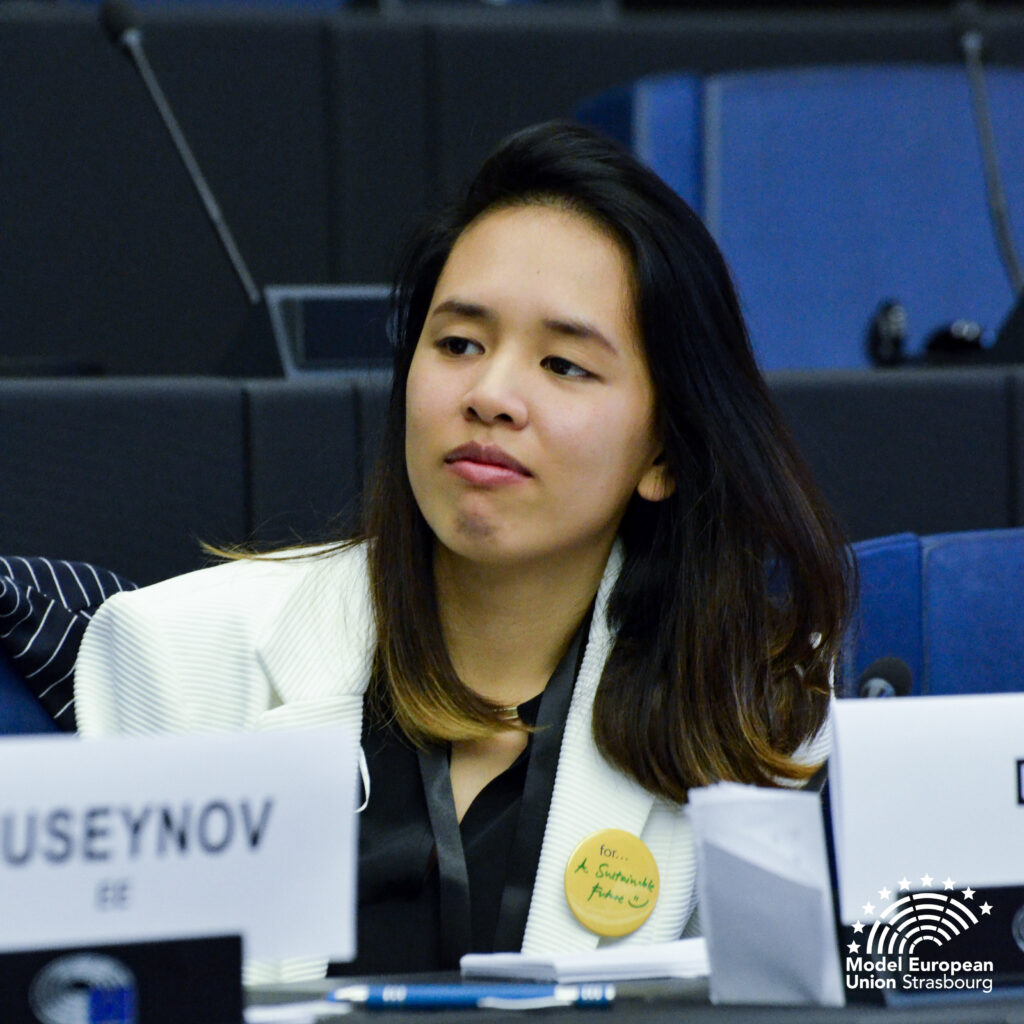
Hello, I’m Michelle Diaz! I grew up between Ireland and the Philippines, and graduated with a B.A. International Joint Honors in English Literature & Information and Social Computing from University College Dublin, with a year-long academic exchange at Waseda University in Tokyo, Japan. I’m currently a second year Master in Management student, having spent the first year at the Singaporean campus. My interests are in sustainability, ethical issues in business and technology, and impact ventures. Moreover, in my downtime, I love watching films, tv shows, documentaries & I spend a significant amount of time reading and writing. In another life, I would actually be in graduate school for creative writing.
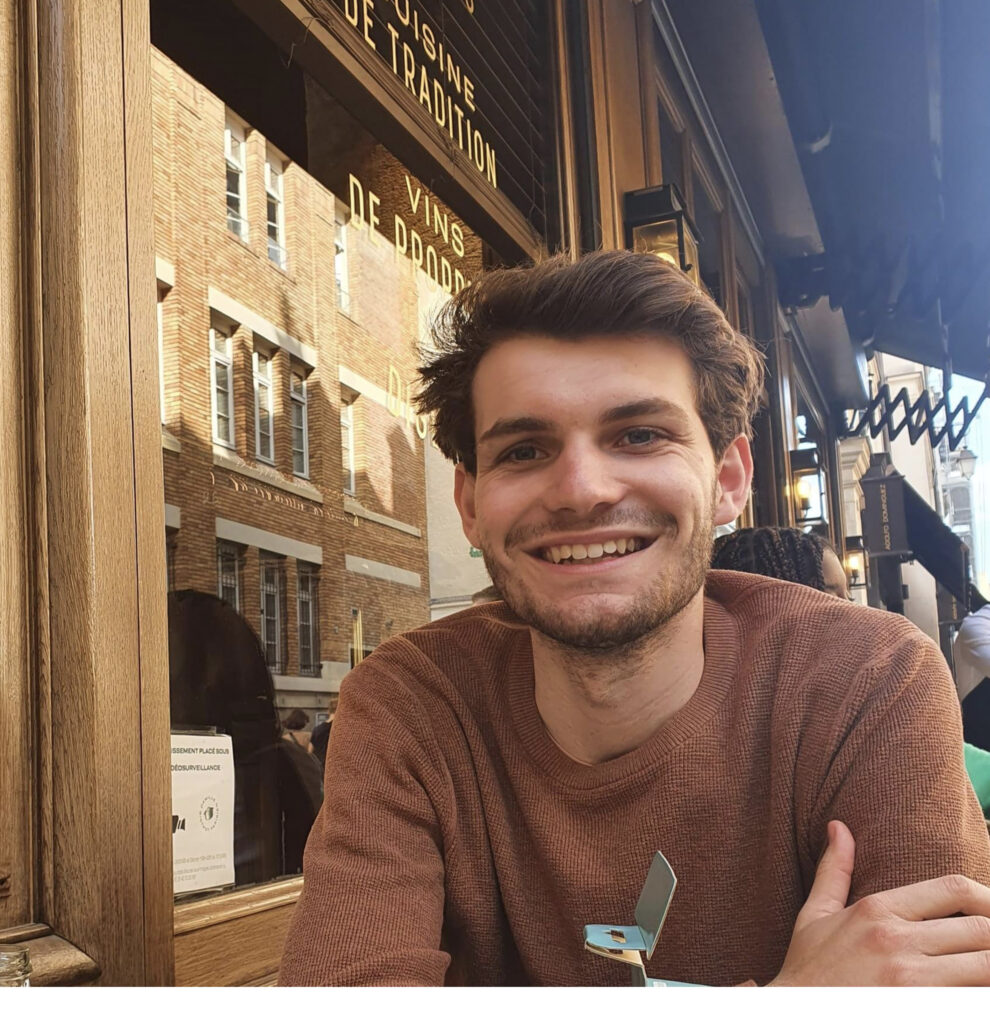
Hi! I’m Pieter Jan Motmans, 21 years old and born in Antwerp. I have obtained a Bachelor in Business Engineering with a specialization in Management Information Systems from the University of Antwerp. I am currently in the first year of the Master in Data Sciences and Business Analytics. Outside of academics, the activities that I devote most of my time to are basketball and reading.
I look forward to the many enriching discussions we will have about the societal impact of technological advancements!

Hello! I am Kunal Purohit, originally from Udaipur, India. After engineering, I worked in product in two different Tech companies for two years and while pursuing my first year of MIM at ESSEC, I am currently working as Data Analyst Apprentice at a startup in Paris and also participating in Accenture SBA Chair. Reading about new technologies, writing blogs, playing Table-Tennis, listening to podcasts and watching movies are my interests. Fluent in 3 different Indian regional languages and English, I am currently learning French.
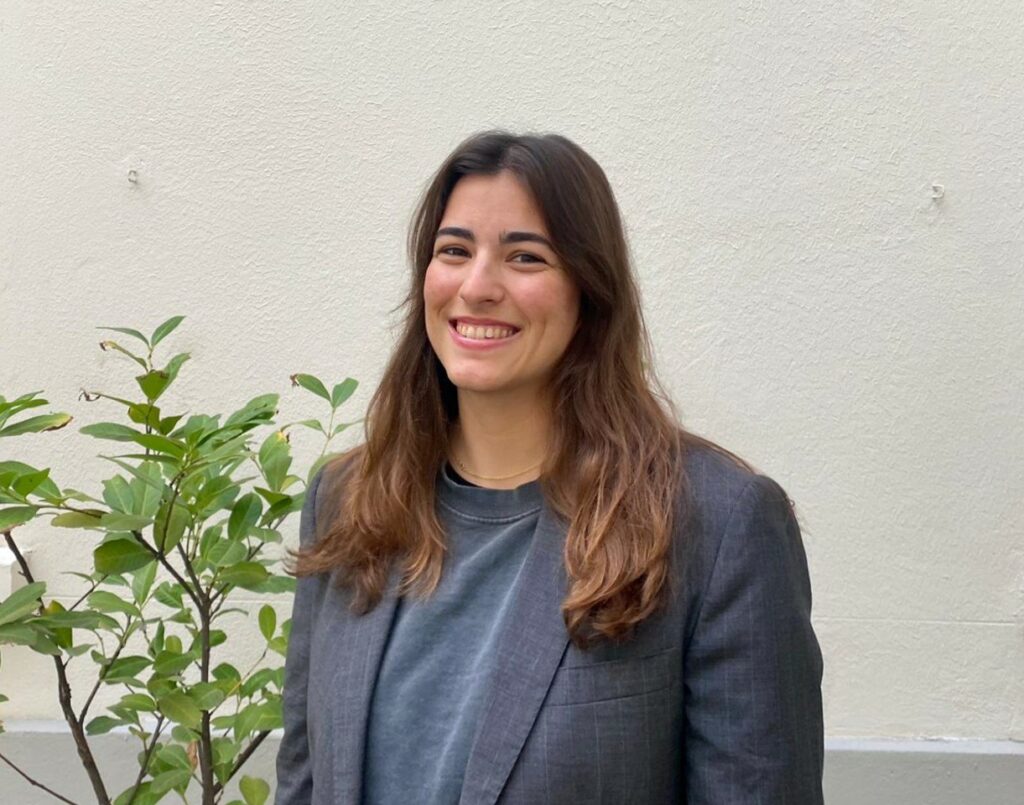
Hi, I’m Marina Pellet, I’m French and Hungarian, and I am a student in the DSBA Master's program created by Essec and CentraleSupelec. Before that, I studied in London at UCL and I obtained a bachelor of Management Science with a specialization in Cybercrime. I speak four languages and I have lived in six different countries. I love photography, cinema and reading. Also, I am very keen on sailing and kitesurfing. I am simultaneously excited and concerned about the increasing use of technology by society, so I can’t wait to discover all aspects together!

Hi, I’m Nelberto “Sam” Quinto and I am a PhD student interested in topics related to the economics of artificial intelligence (AI) and the future of work and education. My fascination with AI stems from my experience working on challenging projects as a data scientist for BNP Paribas for 2 years and interning in tech firms like Amazon and Palico in Luxembourg and Paris. Meanwhile, I owe my affinity for education from working as a teacher and education program volunteer in my home country in the Philippines. Outside of work and school, I practice martial arts, play more than 10 musical instruments, and love traveling to discover new cuisines and cultures.
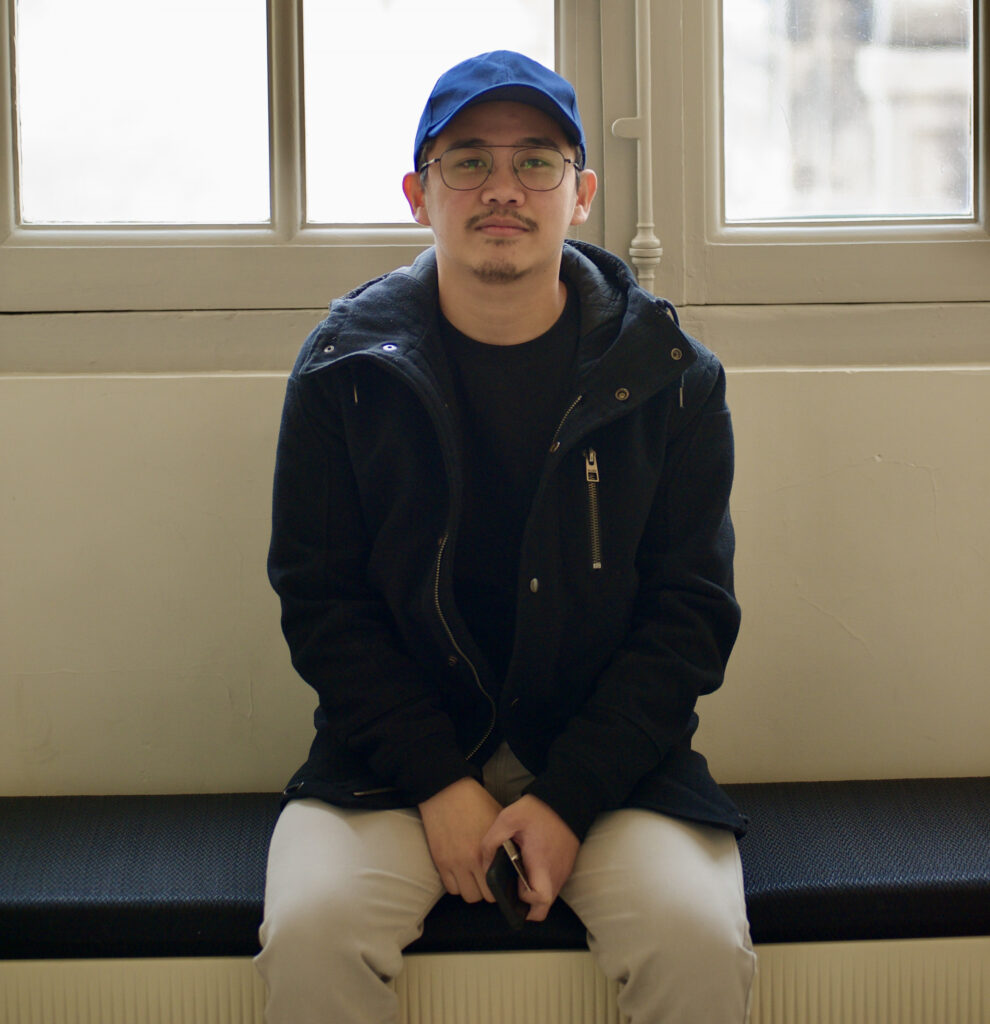
Hi! I’m Neil Romualdez Jr, 23 years old. I’m currently taking the Master in Strategy & Management of International Business under the Managing Digital Transformation & Innovation Track. Prior to this, I graduated with a bachelor’s degree in Mathematics. I had a short stint in trade reconciliations for hedge funds before I worked on public policy as an economist for the Philippine Ministry of Finance. I am deeply interested in how emerging technologies and our dependence on them can change the way the world interacts and manages its resources. In my downtime, I read books, watch movies, and play musical instruments.

Hello my name is Rina. I completed my Global BBA at ESSEC through the Singapore-Paris track and graduated in 2020. After that, I spent 2.5 years as a financial analyst at large digital and marketing agencies. This allowed me to have multi-cultural and international experiences, from my upbringing in the Philippines to living abroad, especially in Singapore, Paris, and Barcelona over the past 6.5 years. I am currently a pioneering master student in MSc in Sustainability Transformation 2022–2023 program at ESSEC, Cergy Campus. In the face of the global climate crisis and other challenges, my main interests are at the core of sustainability, social innovation, and making a positive influence in our society. I am especially curious about how technology interacts with green and sustainable growth within the confines of our planetary boundaries. I am thrilled to be part of the editorial team and to learn more!

Hi, I'm Vanshika Sharma. I grew up in New Delhi, India. I completed my Bachelor's in Commerce (Honours) from the University of Delhi. I'm currently an M2 student of Master in Data Sciences and Business Analytics at ESSEC Business School and CentraleSupélec. Prior to joining this master’s, I worked for two years as an Associate in Quantitative Analytics and Data Science at Gartner, Inc. I have always been intrigued by how transforming data into meaningful insights can lead to better decision-making and innovation. My interests are in exploring upcoming technology, its influence on various industries, and how it can be used to promote sustainability. In my free time, I love binge-watching thriller series, exploring different cities, and discovering their gastronomy (especially various vegan/vegetarian food options).
IDEAS newsletter #6 has just been released!
This month, we propose you to learn more about the first roundtable & poster session hosted by its members as well as news on the impact of AI-generated music on Copyright, the recent EU legislation on crypto-assets, and more.
To read it, or if you want to subscribe, please follow this link.
IDEAS newsletter #5 has just been released!
This month, we propose you to discover the portraits of two students members of the editorial board as well as news on cryptocurrency, the launching of GPT-4, and more.
To read it, or if you want to subscribe, please follow this link.
Institute for AI & Business conference on “How to build a democratic awareness of AI?” was held on March 7. Thanks to the contributions of Laurent Bibard, Gontran Peubez, Patrick Albert, Jean-Gabriel Ganascia, Nicolas Sabouret and Florence G'SELL, the participants had the opportunity to engage in a fruitful conversation addressing various aspects of AI - its ethics, legal considerations, citizen dimension... What emerged was that defining a space of democratic awareness in AI requires a comprehensive and collaborative approach that involves all stakeholders - including scientists, policymakers, businesses, and civil society. It also requires an awareness of the opportunities and challenges of AI, and a willingness to work together to ensure ethical and responsible use of the technology.
A special thanks to ESSEC DSBA students Paul Bédier and Marina Pellet who moderated the discussion and provided enlightening insights.
And thank you to all the participants who showed a deep interest in the topics discussed.
To watch the replay (in French):