Mis en avant


AS AN INCREASING NUMBER OF PEOPLE MIGRATE TO CITIES, WILL AI'S ADOPTION EMPOWER CITIES TO PROTECT ITS INHABITANTS FROM THE RAMIFICATIONS OF CLIMATE CHANGE?
[Student IDEAS] by Seethal Reddy Kauluri - Master in Management at ESSEC Business School
This article will look into the definition of the attention economy, what it entails, how it affects society at large, and why everyone should care; particularly in this new age of exponential and wide-use of artificial intelligence. Moreover, it will guide a possible way forward for citizens to deal with the attention economy, and underline the sway that users have over the tech services that govern our daily lives.
---
“ AI is the new electricity.” - Andrew NG, co-founder of Coursera and Google Brain Deep Learning Project.
From bushfires in Australia, floods in India, droughts in Africa, to dry corridors in Central Asia, we have seen some of the deadliest and costliest climate disasters of history[1] in the recent past. They won’t be the last of such disasters to occur if our efforts to fight climate change remain scant as today. According to the United Nations[2], the global emissions were supposed to be reduced by 7.6% per year between 2020 and 2030 in order to limit global warming below 2 degrees Celsius (3.6 degrees Fahrenheit) set at the Paris Agreement. However, global emissions increased in 2021 after a dip by 5% in 2020 due to the COVID-19 pandemic.
Cities contribute to over 70%[3] of these global CO2 emissions due to massive industrialisation and motorised transportation systems that still use fossil fuels. They are also the most vulnerable to these disasters as they are home to more than half the world’s population today and three quarters of the population or 6.5 billion people by 2050. Asia and Africa, where the majority of the population still resides in rural areas, increasingly face the stress of rapid urbanisation, while uplifting living standards at the same time. According to Mckinsey Global Institute's report[4], Asia will starve due to increasing droughts, and India may lose up to 30 percent of annual daylight hours by 2050 due to rising temperatures.
As we desperately hunt for solutions to protect our cities in the wake of this emergency, this article critically compares and assesses the potential of AI as a solution as it is increasingly revered today in various applications due to its abilities to perform human-like tasks faster, with minimum errors, and at a much grander scale than was possible before.
To overcome the challenge of rapid infrastructural development while improving quality of living, many African and Asian countries are looking to build smart cities: to integrate advanced technologies to manage overcrowding and traffic, and to manage resources better. Smart cities also seem to be a way of attracting foreign investment as they are seen as an opportunity to expand markets, promote innovative products and services, tap into emerging hubs for skilled workforce and gain trade benefits. While there is no universally accepted definition of a smart city, in a broader sense, it has been defined by multiple sources as a city that leverages smart technology and communication, such as, data analytics, cloud computing, Internet-of-Things (IoT), or artificial intelligence to achieve operational efficiencies for the welfare of the citizens. But this definition doesn’t explicitly state that smart cities are necessarily built to be resistant to the adversities of climate change.
According to the Intergovernmental Panel on Climate Change[5], Climate Resilient Development is urgently needed. It defines this framework as, “reducing exposure and vulnerability to climate hazards, cutting back greenhouse gas emissions and conserving biodiversity are given the highest priorities in everyday decision-making and policies on all aspects of society including energy, industry, health, water, food, urban development, housing and transport.” Therefore, as the global smart cities market[6] is expected to grow to the value of about $1.38 trillion by 2030, there is an increasing need to refocus this investment on building smart cities that are, in fact, resilient.
Before proposing solutions, let us first analyse some popular non-AI experimental eco-settlements and assess whether inspirations can be drawn from their styles of governance, economy, and self-sufficiency in achieving climate-resilience. One such settlement is Auroville[7] in Viluppuram district of India, which was founded in 1968 as a community in which people from all over the world could come together and live in harmony, transcending the barriers of nationality, race, and religion. The town is resilient to climate as the inhabitants are committed to sustainable living while reducing environmental impact by adopting methods such as using renewable energy, organic farming, and implementing water conservation and waste management systems. Auroville also places a strong emphasis on educational programs that help build the knowledge and skills needed to adapt to the impacts of climate change. It is home to several research centres and innovative projects that focus on sustainability and climate resilience.
Another utopian settlement project is NEOM[8], which is part of Saudi Arabia’s vision 2030 that aims to offer its citizens the best of diverse climates - from sun-soaked beaches, floating industrial islands on Red sea, to ski resorts in snow capped mountains, all while running on 100% renewable energy. The region, an area larger than Israel, aims to eliminate cars and roads by replacing them with a hyper-speed rail that covers the entire Line - the shape in which the city will be built for a length of about 177 kms. Each block of this city aims to be self-sufficient by building schools, groceries and other basic amenities at a walkable distance to cut emissions. The project also claims to care for biodiversity by building a coral-reef restoration project.
However successful or utopian these experiments might sound, it is overly ambitious to adopt their styles on a large scale. Auroville is a close-knit community with a number of residents just over 3000, although the plan was initially to attract tens of thousands more residents. This sense of unity helps build social resilience, which is essential for climate resilience but cannot be replicated at a global scale due to bureaucracy and disharmony between national and local governments. This is also why NEOM, which aims to host up to 9 million residents by 2045 (only 0.09% of the world population by then), aims to have an independent governance system with laws of its own, which not only substantiates that it is easier to control climate policies in a smaller sample, but also establishes that it is impossible to achieve these climate and self-sufficiency objectives while remaining under the law and economy of its host country that still derived 68%[9] of its budget revenues from oil in 2019. Another challenge of scaling these models is the differences in global diversity. Even though Auroville brings together diverse people from all over the world, they are still connected through a common sense of spirituality and respect for nature. These individuals share values of collectivism and insist on learning a common language, Tamil, to facilitate cooperation and smooth community functions. Finally, such models depend on local resources for self-sufficiency. While Auroville depends on its organic farms and renewable projects for food, energy and water, Neom aims to build a close-knit self-sufficient economic hub by attracting world-wide talent from 14 industrial sectors in creating a concentration of resources and economic power that makes it far easier to achieve resilience here than at a macro-level. Analysts also suggest that projects like Neom are more a delay towards climate objectives than a solution as living in Saudi Arabia necessitates the use of air conditioning, which is still challenging to shift into renewables.
Therefore, as the sustainable models implemented in the cities discussed above cannot be replicated on a larger scale, we must turn towards more pragmatic and viable solutions to improve our cities’ climate resilience.
According to a survey conducted by BCG[10], AI can expedite reduction of GHG emissions up to 10% per organisation and up to 5.3 billion tons of CO2e if scaled globally. This is because of its enormous power of gathering, computing, and analysing unstructured, multidimensional, and end-to-end data points. As cities in Asia and Africa suffer from inefficient city designs due to informal settlements and inadequate public transportation systems, these regions can radically transform into sustainable and resilient cities by leveraging AI’s power in 360-degree information modelling to optimise energy, reduce wastage, and improve accuracy and speed of climate-modelling for better mitigation and preparedness in the short-term and adaptation and resilience in the long-term.
In buildings, energy can be optimised by autonomous lighting, heating, and cooling based on occupancy levels, time of the day, weather conditions and occupants’ comfort. AI can be used to track carbon foot-print, water usage, and waste production in order to set consumption limits. AI can spot anomalies through data gathered from sensors and check performances of equipment outside the norm for timely maintenance and repairs. AI can predict energy requirements to ensure ample solar panels and storage are installed for uninterrupted renewable energy consumption. Comparative data analysis from other green-buildings, or with simulations based on AI-built “digital twins”, can be used to prescribe alternative architectural designs in comparable areas to further reduce emissions if required. For example, it can be prescribed to use tinted windows or green roofs to keep the buildings cooler if the major carbon emitter for a particular building is air conditioner. AI can cluster the occupants based on consumption behaviours and emissions for law-makers to either encourage favourable behaviours through reward systems or through penalties.
Similarly in transport, AI can optimise train and bus routes and frequencies by matching demand and supply based on time of day, season, weather, etc. It can be used to predict repairs and maintenance in advance to prepare for downtime and ensure that public transportation is always available and running smoothly without interruptions. It can also be used to propose on-demand services or reduce off-peak inefficiencies caused by vehicles running almost empty because of their fixed itineraries and schedules. Personal vehicles can be replaced by car-pooling that matches passengers based on pickup and destination. AI can also analyse data about walking, running, and cycling activity to make recommendations. For instance, it can suggest the best locations for basic neighbourhood amenities such as groceries, coffee shops, pharmacies, schools and emergency clinics, to ensure widespread access that does not rely on fossil fuels. It is also possible to centralise transport systems to optimise routes and traffic. A city’s transportation system can be entirely integrated on a 360-degree carbon monitoring to ensure that collectively, the city’s transport stays within the carbon budget. If at a particular time, personal vehicles on road cause more emissions, reinforcement learning can be used to encourage citizens to use more of public transport by increasing frequency of trains and metro while increasing time of red traffic signals on the road to discourage vehicle traffic or converting roads into carbon-free zones to promote cycle and pedestrian-traffic only.
AI can study vast data from weather sensors, satellites, news reports, and social media, and spot hidden patterns and events to predict risks, such as temperatures, sea-levels, droughts, rainfalls, heat-waves, hurricanes etc. Predicting these events can help prepare the necessary infrastructure for minimising the consequences, including utilities’ networks (water, gas, electricity, etc.), critical to the proper functioning of a city. These patterns and clustering can also help predict the degree of impact for each region based on population density, industrial activity, infrastructure, biodiversity, etc and compute the degree of rescue services and relief supplies required for better mitigation. An integrated biodiversity system can help monitor species, plantations and conditions of habitats to spot patterns of endangerment, deforestation and environmental factors affecting the weather patterns.
Thus, AI’s power of integration systems from macro to micro-level emission monitoring and hazard prediction can help build a harmonised source of truth and scale what smaller experiments like Auroville or NEOM have on a much larger, global scale.
The aforementioned ideas may sound like the answer to our problem, but there is resistance in the adoption of AI due to several reasons. Firstly, the data is widely scattered and dissociated as there is a lack of centralised data source. This is because the climate objectives are too broad and the firms and law-makers haven’t adequately defined the KPIs to be tracked for each sector. To establish the same could be challenging as a large infrastructural overhaul will be required to substitute independent systems with interconnected, autonomous and accountable systems and appliances which might be highly infeasible depending on the scope of project and the cost of sensors, storage, computing resources, and personnel required to implement the models. Therefore, it is the duty of the law-makers and enforcers to break down the objectives to smaller key results and introduce policies for infrastructure, construction and automobile industries to mandate accountable data collection points in their products. Secondly, there is lack of education and training on AI expertise among organisational leaders and governing bodies to realise its vast potential. Free online and offline educational programs, workshops, and certifications shall be set up from schools to organisational leaders and policy-makers to equip them with the requisite knowledge. States should also promote research centres, events and competitions in the field of green-AI to encourage new and innovative ideas. Another challenge is that setting up large-scale and centralised AI integrated systems requires huge financial investments which is challenging for countries in Asia and Africa due to the pressure of mitigating fundamental gaps in the economy and infrastructure. According to a report by OpenAI[11], it is estimated that the cost of training a model on a large dataset will increase to $500 million by 2030 due to an increase in the size of datasets needed to train large models. However, setting up this investment right away will ensure resilience, cost-efficiency and a significant gain in the GDP of up to 4.4%[12] by 2030. But even if these governments were convinced to step up the financing for this preparation today, a larger issue regarding AI adoption would remain: can we trust the results that AI provides?
One of the reasons why AI-based recommendations are not always relied upon is due to the quality of their design and model training. Human intervention in feeding, labelling and training data while the model is built can give room for bias and skewed results. For example, if the AI-based traffic system mentioned earlier aims to manage demand and supply to optimise bus routes in a city, such a model will work inefficiently if it has been trained on historical data of a city’s bus routes where certain high-income areas never had a bus-stop because they used cars. Such a model will have to be trained on collecting data from all modes of transport to understand commuting patterns. New experimental car-pooling and bus routes will have to be set up initially to collect data on public transport preferences of the citizens. Another example is if a model has studied smartphone data of a region to understand walking and cycling patterns to plan roads and accessible neighbourhood amenities such as groceries and pharmacies. Such a model will work inadequately if the data collected was from an area of ageing population with minimal smartphone adoption. Therefore, such models will have to be trained by nudging some preferred behaviours first[13], and may rely on human modelling assumptions (such as that which was used in the 1970s to predict train demand for the newly created BART system in San Francisco, and for which Dan McFadden received the 2020 Nobel Prize in Economics)[14].
An additional concern is regarding the confidentiality of the information captured by the AI systems that can compromise privacy and security. The accuracy of these models will depend on the extent to which the inhabitants are willing to share their information. The law-makers need to carefully consider the type of information to be mandatorily collected from the citizens, and ensure that it does not compromise their freedom of choice. Additionally, will highly autonomous systems be capable of considering externalities? Or new patterns? Indeed, what if green-buildings’ AI integrated systems were trained on pre-pandemic occupancy levels, but when another pandemic, like COVID, hits the region causing almost everyone to work from home? Will such AI systems accept the extra-bandwidth of energy needed to run the residential buildings? It would be necessary that such a system should also train the carbon budget at the macro-level and maintain a global balance of buildings’ emissions, by temporarily transferring the carbon budget of office buildings to that of the residential buildings. This brings us back to the general limitations of AI that when faced with adversities, especially in situations when no historic data or patterns exist, a human intervention is always required. Then the real question remains for us to ask ourselves, whether undergoing such an ambitious infrastructural project is justified given the human efforts required despite the massive capital expenditure and with the uncertainties of the risks present in adopting it.
Given the numerous applications of AI in mitigating climate risks and achieving climate-resiliency, overlooking such an immense potential will be a significant missed opportunity. However, due to the challenges present in adopting a globally-scaled autonomous infrastructure and the accuracy of its decisions, AI is only an accelerator towards achieving our climate objectives and not the solution itself. Just as it is easy to coordinate smaller-sized homogenous experimental cities, implementing AI for climate should be scaled step-by-step starting with the most vulnerable sectors by carefully monitoring the results and reimplementing models in similar and comparable conditions.
Achieving climate-objectives goes beyond adoption of AI. International organisations, governments, urbanists and corporations have a fundamental role in adopting a harmonious framework by breaking down climate objectives into smaller-measurable targets for each region, industry and sector. They play an important role in creating a clear path for investment and innovation. Governments should pave the way for adoption of new technologies that will not only make our future cities smart, but future-proof them. Policies in education, research and business will play a defining role in the future of AI and in its adoption for a green, stress-free future of habitation.
[1] 10 costliest climate disasters of 2022. (2023). World Economic Forum.
[2] Cut global emissions by 7.6 percent every year for next decade to meet 1.5°C Paris target. (2019). UN Environment Programme
[3] Dasgupta, S., Lall, S., Wheeler, D. Cutting global carbon emissions: where do cities stand? (2022). World Bank
[4] Woetzel, J., Tonby, O., Krishnan, M., Yamada, Y., Sengupta, S., Pinner, D., Fakhrutdinov, R., and Watanabe, T. Climate risk and response in Asia. (2020). McKinsey Global Institute.
[5] What is Climate Resilient Development and how do we pursue it? Intergovernmental Panel on Climate Change report.
[6] Thormundsson, B. Smart cities market revenues worldwide 2019-2030. (2023)
[7] Koduvayur Venkitaraman, A., Joshi, N. A critical examination of a community-led ecovillage initiative: a case of Auroville, India. Clim Action 1, 15. (2022).
[8] Palmer, I,. Is Saudi Arabia’s New Climate City ‘Neom’ Future Or Fantasy? (2022) Forbes.
[9] Almasoud, A., Albasri, K., Alshammari, M., Alghamdi, R., Alanazi, A., Binladen, S., Alsikhan, S., Kingdom of Saudi Arabia Budget Report. (2018). KPMG.
[10] Maher, H., Meinecke, H., Gromier, D., Garcia-Novelli, M., Fortmann, R. AI Is Essential for Solving the Climate Crisis. (2022). BCG.
[11] AI Model Training Costs Are Expected to Rise From $100 Million to $500 Million By 2030. (2023). MetaversePost.
[12] Herweijer, C., Combes, B., Gillham, J. Artificial intelligence and the fate of planet Earth. (2019). PWC.
[13] Cowls, J., Tsamados, A., Taddeo, M. Floridi, L. The AI gambit: leveraging artificial intelligence to combat climate change—opportunities, challenges, and recommendations. (2021). AI & Soc.
[14] McFadden, D. The Measurement of Urban Travel Demand. (1974). Journal of Public Economics, 3, 303-328.
[Student IDEAS] by Rinalyn Pagao - MSc in Sustainability Transformation at ESSEC Business School
The intersection of degrowth and technological advancement presents a complex and nuanced picture for our future. This article explores whether it could coexists and complement each other to some extent.
---
Do you ever feel like the pursuit of economic growth has taken us down a dangerous path, where the health of the planet and its inhabitants are sacrificed for the sake of financial gain? If you are nodding your head in agreement, then continue reading because we are about to dive into a fascinating topic: degrowth.
In our current global society, the growth-based economic model has dominated for too long, leading to environmental degradation and social inequality.1 Fortunately, an alternative concept of degrowth has emerged, promoting a supposedly sustainable and more equitable way of life. However it does not surprise us that regardless, technological advancement and digitalization continue to shape and transform our world in profound ways that could seem inevitable.
In this article, we will explore the intersection of degrowth and technological advancement, and critically analyze their intertwined potential implications in a global context.
Degrowth is a concept that challenges the idea that economic growth is necessary for human development and wellbeing. It is based on the principles of sufficiency, resilience, and equity, and calls for a reduction in production and consumption levels to achieve a sustainable and equitable society.2 While the concept of degrowth has its roots in the 1970s, it has gained more attention in recent years as a response to the current ecological and social crises, however it also raises some criticisms as such that degrowth is too radical and impractical, while others claim that it overlooks the needs of those in poverty.3
Technological advancement has undoubtedly brought about many positive changes to our world, from medical advancements to increased connectivity and access to information. However, it has also been associated with negative impacts such as environmental degradation, social inequality, and job displacement. The debate around technological determinism, the idea that technology shapes society, versus social constructivism, the idea that society shapes technology, is still ongoing.4 Both views have their merits, and the truth likely lies somewhere in between as per what the scholars suggest. While this debate is not the focus of this article it is still important for us to consider both perspectives when thinking about the relationship between technology and society, as this will help us to develop a more nuanced understanding of this complex issue.
Technological advancements per se in the sustainability sector are the renewable energy, clean transportation, energy efficiencies, and carbon capture and utilisation storage (CCUS) - can these potentially be a powerful tool to degrowth our economy?
The latest report done by the International Energy Agency (IEA) on its Clean Innovation Report: Global status of clean energy innovation in 20205 acknowledged that technological innovation is crucial for addressing climate change and achieving the goals of energy policy, such as expanding access to energy and lowering air pollution. However, it might be hard to monitor innovation progress, specifically the major challenge to be able to quantify or allocate inputs to policy goals like more affordable technology, industrial change, and economic growth. Nevertheless, a number of measures, including (1) funding and (2) patenting, might provide insight into clean energy innovation on a worldwide scale. More comprehensive sets of measurements are being created by some governments in order to find and share best practices.

This trend tells us that the government funding on energy research and development increased by 3% in 2019 to USD 30 billion globally, with over 80% of that money going toward low-carbon energy technology. Specifically in China, the low-carbon component of energy research and development increased by 10% in 2019, with significant increases in research and development for energy efficiency and hydrogen in particular. Spending on public energy R&D increased by 7% in both Europe and the United States, exceeding the previous year's trend.

On the other hand, in terms of patenting since 2011, the quantity of patents submitted for low-carbon energy technologies has sharply decreased after a decade of rapid increase. Patents capture part of the intermediate R&D outputs, a percentage of which will be converted into commercial products, and so offer a window into the research operations that are producing new information with a view toward its perceived commercial value. However, general patenting trends offer us some insightful data on the scope and direction of clean energy innovation.
The drop in renewable energy patenting activity from roughly 2011 may be due to the maturity of some technologies. The dominance of existing solar PV, bioethanol, and wind technologies may discourage researchers from striving to improve them and enter the markets in Europe, Japan, and the United States. Moreover, renewable energy patenting continues to be more active than it was before approximately 2007, and Li-ion battery patenting, in particular, is expanding (EPO and IEA, 2020).
Now that we have built a solid foundation on what constitutes a green technological innovation, what begs a question here is that how could it intersect with the degrowth principle? In the publication done by Hickel and Kallis (2019) they investigated and tried to answer: is green growth possible?6 According to the green growth theory, sustained economic expansion is consistent with our planet's ecology because technology change and substitution will allow us to completely disconnect GDP growth from resource use and carbon emissions. This claim is increasingly assumed in national and international policy, including the Sustainable Development Goals. Green growth has developed as a major policy response to climate change and ecological disintegration. However, empirical evidence on resource utilization and carbon emissions does not support green growth theory. After reviewing relevant papers on historical trends and model-based projections, this research study conducted reveals that:
“(1) there is no empirical evidence that absolute decoupling from resource use can be achieved on a global scale against a background of continued economic growth, and
(2) absolute decoupling from carbon emissions is highly unlikely to be achieved at a rate rapid enough to prevent global warming over 1.5°C or 2°C, even under optimistic policy conditions. We conclude that green growth is likely to be a misguided objective, and that policymakers need to look toward alternative strategies.”
Hence, even looking at the intersection between the myriad of technological innovations we have reached today, especially the energy transition needed to net zero emissions by 2050 commitment, the promise of a sustainable future for our current and for the next generation is still not guaranteed.
In this section, let’s dig deeper on the four main paradoxes that hinders technological advancement toward sustainability and degrowth: (1) decoupling growth from resource consumption, (2) e-waste generation, (3) conflicting power and politics, and (4) cultural and social implications.
Degrowth advocates for a reduction in production and consumption levels to achieve a sustainable and equitable society.7 However, this poses a challenge in a world where economic growth is closely tied to resource consumption. This means that if we want to reduce production and consumption levels, we will also need to reduce economic growth. This is a challenge because economic growth is seen as essential for prosperity by many people. There are a number of ways to address this challenge. One way is to change the way we measure economic growth. We could focus on measures of well-being, such as life expectancy, happiness, and environmental quality, instead of GDP. Another way is to decouple economic growth from resource consumption. This means finding ways to grow the economy without increasing resource consumption.
While technological advancements can facilitate the transition towards renewable energy and more efficient production processes, it is unclear whether they can enable a complete decoupling of growth from resource consumption. According to the Global Footprint Network, achieving sustainable resource use would require a reduction in resource consumption by roughly 75% in high-income countries and 90% in middle-income countries.8 This would be challenging to achieve through technological advancements alone. In addition, the findings in the recent study stated that while energy and material efficiency improvements have reduced the amount of resources required for each unit of GDP, the overall consumption of resources has increased due to economic growth.
According to the United Nations The Global E-waste Monitor 2020, in 2019 there was a record high of 53.6 million metric tonnes (Mt) of electronic waste generated globally, which is an increase of 21% in just five years.9 E-waste is a term used to describe discarded electronic devices and equipment such as discarded electronic devices and equipment, such as computers, mobile phones, televisions, refrigerators, and air conditioners. It may contain harmful substances, and can pose significant risks to the environment and human health if not managed appropriately.
The production of e-waste is increasing quickly due to advances in technology and the popularity of electronic devices among consumers.10 As a consequence, it imposes potential conflicts between degrowth and technological advancement. The increasing levels of e-waste, low collection rates, and non-environmentally sound disposal and treatment of this waste stream pose significant risks to the environment and human health. Also, as technology advances, older devices become obsolete and are often discarded, leading to a significant environmental impact.11 Hence, degrowth principles call for a reduction in consumption levels, while the technology industry relies on continuous consumption and disposal of new products.
The implementation of both degrowth and technological advancement requires significant changes to the current global economic and political systems, which is a very challenging task. The dominant economic and political actors may not be willing to relinquish their power and privilege to facilitate such changes. It can be seen in the reluctance of many governments to adopt policies that would limit economic growth or reduce resource consumption.
Furthermore, this is exemplified by the failure of the COP26 climate summit where we all witnessed countries failing to agree on crucial measures to limit global warming.12 The International Energy Agency has also warned the public that current climate policies fall short of what is required to limit global warming to 1.5°C above pre-industrial levels, and rapid action is needed to avert a climate catastrophe. In addition, there are questions around who benefits from technological advancements and whether the benefits are distributed equitably. Finally, a study by Oxfam International found that the world's wealthiest 1 percent emit more than double the carbon emissions of the poorest 50 percent.13 This highlights the need for degrowth principles to reconsider and move away from the mentality that growth is good for the economy, instead prioritizing sustainability, equity, and well-being of the public over endless growth and consumption.
Finally, a report by the World Economic Forum found that the gender gap in the technology sector is widening, with women underrepresented in artificial intelligence and other emerging technologies.14 Additionally, the reliance on technology can also lead to social isolation and a disconnection from the world behind the screens of one's smartphones. This illustrates that the development of new technologies can reinforce existing power structures and exacerbate social inequalities. In the article published by UNICEF, it is found that social media use was associated with higher levels of anxiety and depression among teens’ mental health.15 The findings reveal that social media use may contribute to anxiety and depression by increasing social comparison, leading to feelings of inadequacy, and providing a platform for cyberbullying. However, it is important to note that correlation does not equal causation, and more research is needed for us to understand the complex relationship between social media use and mental health.
Throughout this article we have seen that the intersection of degrowth and technological advancement presents us with a complex and nuanced picture for our future. Technological advancement is the development of new technologies that can improve our lives in a variety of ways. On the other hand, degrowth is a socio-economic paradigm that advocates for a reduction in production and consumption levels to achieve a sustainable and equitable society. While both concepts offer potential solutions to the ecological and social challenges we face, we must recognize their limitations and critically evaluate their implications. Degrowth, for example, could lead to a loss of jobs and economic growth. Technological advancement hence could have negative environmental impacts, such as increased pollution and resource depletion.
The cultural and social dimensions of technological advancements must also be considered. For example, some technologies, such as social media, can have negative impacts on mental health. We must work towards a more equitable and sustainable global society, where everyone has access to the benefits of technological advancement, and where the negative impacts are minimized. Ultimately, our goal is to find a balance between sustainability and progress, and to ensure everyone can enjoy the benefits of technology without harming the planet or ourselves.
1. Technology is a tool, not a solution. It can help us address environmental challenges, but it cannot solve them on its own. We need to use technology in combination with other approaches, such as degrowth and social change.
2. Achieving both degrowth and technological advancement would require significant global changes. These changes would be difficult to achieve due to political and economic complexities.
3. In our current economic system, which is driven by growth, it can be challenging to reduce production and consumption levels. This would require a fundamental shift in the way society and the economy operate.
4. Technology has both benefits and limitations. It can improve our lives, but it can also create new problems and exacerbate existing ones.
5. To achieve just sustainable economic transition, we need to recognize the complex and interconnected nature of our environmental, social, and economic challenges. Developing solutions that address all of these challenges is needed simultaneously.
[1] Hickel, J. (2020). Less is More: How Degrowth Will Save the World. Penguin Random House.
[2] Degrowth Movement. (2023). Degrowth. Retrieved July 6, 2023, from https://degrowth.info/degrowth
[3] Victor, P. A. (2019). Growth, degrowth, and climate change: A scenario analysis. Ecological Economics. Retrieved from https://www.ledevoir.com/documents/pdf/victor_growth.pdf
[4] Jonas Hallstrom (2020). Embodying the past, designing the future: technological determinism reconsidered in technology education. International Journal of Technology and Design Education, Retrieved from https://link.springer.com/article/10.1007/s10798-020-09600-2
[5] IEA (2020), Clean Energy Innovation, IEA, Paris https://www.iea.org/reports/clean-energy-innovation, License: CC BY 4.0
[6] Hickel, J. and Kallis, G., 2019, 'Is Green Growth Possible?,' New Political Economy, DOI: 10.1080/13563467.2019.1598964
[7] Kallis, G. (2011). Degrowth: A vocabulary for a new era. London: Routledge.
[8] Global Footprint Network. (2019). Ecological Footprint and biocapacity of 209 countries and territories, 1961-2016. Retrieved from https://www.footprintnetwork.org/content/documents/2019_Country_Fact_Sheets.pdf
[9] International Telecommunication Union. (2020). The Global E-waste Monitor 2020. Retrieved from https://www.itu.int/en/ITU-D/Environment/Documents/Reports/GEM_2020_report.pdf
[10] World Health Organization. (2018). E-waste and children’s health. Retrieved from https://www.who.int/ceh/publications/e-waste-childrens-health/en/
[11] United Nations Environment Programme. (2019). Global E-waste Monitor 2019.
[12] United Nations. (2023). COP26: Together for our planet. Available at: https://www.un.org/en/climatechange/cop26
[13] Oxfam International. (2022, November 8). Billionaire emits a million times more greenhouse gases than average person. Retrieved from https://www.oxfam.org/en/press-releases/billionaire-emits-million-times-more-greenhouse-gases-average-person
[14] World Economic Forum. (2020). The Global Risks Report 2020. World Economic Forum. Retrieved from https://www.weforum.org/reports/the-global-risks-report-2020
[15] UNICEF. (2018). Is social media bad for teens’ mental health?, Retrieved from https://www.unicef.org/stories/social-media-bad-teens-mental-health
[Student IDEAS] by Vanshika Sharma - Master in Data Sciences & Business Analytics at ESSEC Business School & CentraleSupélec
This article delves into the powerful fusion of Digital Twins and AI, shaping a sustainable future. Tracing the evolution of Digital Twins and AI and narrating stories like Virtual Singapore's smart city transformation, the article explores their potential to revolutionize industries and confronts the hurdles in the implementation. Ultimately, it sheds light on potential remedies and new technologies poised to navigate these challenges.
---
In today's digital age, innovative technologies are driving significant transformations in various industries. One such transformative technology is digital twin technology, which involves creating virtual replicas of physical objects or systems. This state-of-the-art technology has proven to be instrumental in optimizing operations, reducing production timelines, and fostering innovation across industries. By connecting the physical and digital realms, digital twins enable simulations, real-time data-driven decision-making, and remote system management.
This brings us to an exciting intersection of technology and sustainability. Can the combination of digital twin technology and artificial intelligence (AI) enhance sustainability efforts? Can this data-driven approach optimize resource utilization, minimize waste, and promote sustainable practices across sectors? In this article, we will explore the concept of digital twins, their role in driving sustainability across industries, the associated challenges, and their future prospects.
Digital twins are high-fidelity digital replicas of physical entities or systems that mimic their behavior and processes over time. By integrating data from sensors and machines, digital twins provide a comprehensive understanding of the physical world, enabling better decision-making and optimizations.
The impact of digital twins has permeated through manufacturing, healthcare, construction, energy, and e-commerce. For instance, Amazon, a global e-commerce leader, utilizes digital twin technology to enhance remarketing advertisements. By leveraging vast amounts of data on users' past purchases, viewed products, and visited websites, Amazon's digital twin algorithm creates personalized replicas of each consumer. This enables tailored experiences and targeted remarketing ads, ultimately driving users back to their platform.
However, the significance of digital twins extends beyond business efficiency. When combined with AI, these virtual replicas hold promise in promoting sustainability by optimizing resource utilization, reducing waste, and fostering sustainable practices across industries. Industrial giants like Unilever harnessed the power of digital twins at its facility in Brazil. They used a digital twin to fine-tune manufacturing parameters, such as the temperature for soap production. Such minor tweaks led to a productivity improvement of 1% to 3% and an energy cost saving of USD 2.8 million.
But how did we arrive at this point, and what lies ahead? Let's delve into the origins of digital twins and AI, explore their convergence, and understand their impact on the sustainability landscape.
Digital twin technology has evolved significantly since its inception in the 1960s. It was first utilized by NASA to create physical replicas of systems on the ground that matched those in space. The breakthrough came during the famous Apollo 13 rescue mission, where a critical system failure threatened the crew's safety. Leveraging digital twin technology, NASA engineers simulated conditions and tested solutions from the ground, eventually guiding the crew back to safety.
However, it wasn't until the early 2000s that the term "digital twin" was coined by Michael Grieves during a presentation on product lifecycle management center. This marked the formal recognition of digital twin technology and its potential to revolutionize industries. The integration of the Internet of Things (IoT) in subsequent years made digital twins more cost-effective and practical, paving the way for widespread adoption across industries.
In recent years, the integration of AI has taken digital twin technology to new heights. AI analyzes data from various sources, providing real-time insights into system performance and empowering organizations to make accurate and timely decisions. Today, AI-enhanced digital twins are at the forefront of sustainability efforts, optimizing operations, reducing waste, and improving resource efficiency. The synergy between digital twin technology and AI drives innovation and facilitates sustainable development, making them indispensable for our future.
Sustainability efforts encompass a multifaceted approach to meet present needs without compromising the ability of future generations to meet theirs. In this context, digital twins and AI have emerged as significant catalysts for driving sustainability.
Digital twins revolutionize system monitoring and optimization, excelling in resource utilization, emissions simulation, and supply chain optimization. They also play a vital role in predicting maintenance requirements, minimizing downtime, and generating cost savings while enhancing productivity.
The increasing role of AI in digital twins further enhances their precision. Acting as digital mirror images, AI leverages real-time data to provide real-time insights into system performance, empowering organizations to make informed decisions based on accurate and timely information. AI algorithms excel in data analysis and predictive capabilities, surpassing human cognitive abilities in speed and accuracy.
Moreover, AI addresses key challenges in the digital twin landscape by facilitating seamless integration and improved performance across systems. It consolidates sensor data, optimizes processes, and ensures real-time updates are delivered, overcoming interoperability challenges. The transformative power of AI in the digital twin ecosystem cannot be overstated, as it enhances the simulation and prediction accuracy of virtual models.
This powerful combination of digital twins and AI not only accelerates sustainability efforts but also implements them more effectively. By leveraging the capabilities of digital twins and the potential of AI, organizations can achieve their environmental goals, propelling us toward a more sustainable future.
The market's response to digital twins affirms their growing importance. In 2020, the digital twin market was valued at $5 billion. However, a 2023 report by Fact.MR estimates this market to swell to a staggering US$ 95 billion by 2033, growing at a brisk 34.3% CAGR from 2023 to 2033. A survey conducted by the Capgemini Research Institute in 2022 adds another dimension to this trend: 51% of the digital twin implementers surveyed believe that this technology will help them achieve their environmental sustainability goals.
There are, of course, varied views regarding the role of digital twins in driving sustainability. While some organizations primarily see this technology as a tool for process efficiency, others perceive its role in product design and development. Regardless, 57% consider improving sustainability efforts as a key driver of their digital twin investments, underscoring the environmental considerations that factor into the adoption of this technology.
To make this idea more tangible, let’s understand it with an example of the industrial manufacturing sector. Here, digital twin technology, coupled with AI, identifies improvement areas to transform operations. Manufacturers can spot pain points, such as machine inefficiencies or quality control issues, that may cause product defects or delays. Digital twins also identify energy loss areas and opportunities to reduce consumption, like inefficient machinery or sub-optimal processes. AI algorithms expedite data analysis and future outcome predictions, surpassing the pace and accuracy of human cognitive abilities. Virtual simulations further curb waste and power consumption associated with physical prototypes, permitting emulation of a production line using a digital twin. This enables changes at every stage to amplify cost savings, boost efficiency, and diminish environmental impact, making digital twins and AI integral allies in the quest for sustainability.
Singapore, a city-state often acclaimed for its smart city initiatives, stands at the forefront of adopting digital twin technology. Its ambitious project, Virtual Singapore, exemplifies how this technology can be harnessed to drive sustainable urban development.
Launched in 2023, Virtual Singapore is a dynamic digital twin of the city, incorporating a wide range of data, from geographic and architectural details to demographic and real-time sensor information. This virtual cityscape empowers authorities to model and analyze different urban scenarios. They can simulate the impacts of new buildings on wind flow, sunlight, and traffic or forecast the implications of population density changes on the city's infrastructure and services. This aids in making data-driven, informed decisions and ensures the city grows sustainably.
Solar potential is another area where Virtual Singapore shines. This digital twin aids authorities in identifying the best rooftops for solar panel installation, promoting renewable energy use and reducing Singapore's carbon footprint. In crisis situations like fires or terror attacks, the digital twin can quickly devise optimal evacuation routes, ensuring citizen safety. Virtual Singapore also supports public health monitoring, measuring the density of disease-carrying mosquitoes to predict potential outbreaks. This leads to swift preventive actions and aids in responding promptly to potential health crises.
Digital twins are playing a significant role in optimizing supply chains and logistics for sustainability, as seen in the collaboration between Maersk and Ericsson in 2023. By creating a digital twin of a shipping vessel, they are able to optimize fuel consumption, leading to a reduction in carbon emissions. Using real-time sensor data, the digital twin modeled the vessel's operations to pinpoint improvement areas. As a result, Maersk was able to cut fuel consumption and associated carbon emissions by up to 20%, contributing significantly to its sustainability initiatives and leading to considerable cost savings. Predictive maintenance enabled by the digital twin also allowed Maersk to proactively address potential issues, mitigating downtime or disruptions.
Implementing digital twins and AI for sustainability efforts is not without challenges. This journey is marked by hurdles that encompass data collection and management, system integration, cybersecurity concerns, significant costs, social, ethical considerations, and even the potential environmental implications of the technology itself. Let's delve into each of these challenges in detail, bringing to light specific case examples.
Data is the lifeblood of digital twin technology, and the process of collection, standardization, and management of this data is indeed an uphill task. Take the case of Singapore's Virtual Singapore project; the creation of a comprehensive digital twin of the entire city demands data inputs ranging from geographical, architectural, to demographic and real-time sensor information. Collating and normalizing this data from varied sources necessitates an intricately devised data collection strategy, coupled with a reliable set of data sources.
The integration of digital twin technology within existing systems, especially in intricate networks like supply chains and logistics, often proves to be a significant barrier. The digital twin initiative of Maersk and Ericsson provides a case in point. To obtain valuable insights, their digital twin had to be compatible with Maersk's shipping operations and Ericsson's telecommunications technology, demanding seamless integration and interoperability.
The heavy reliance on data of digital twin technology and AI makes them prime targets for cyber-attacks and potential data breaches. The case of Amazon, which uses digital twins for re-marketing, underscores the importance of securing customer data against potential threats. This necessitates the implementation of robust cybersecurity measures and a constant state of vigilance.
The significant costs associated with implementing digital twins and AI can pose notable challenges. Unilever's venture into the digital twin realm, for instance, required substantial investments in hardware, software, and training. Simultaneously, the company had to ensure that the complexity of the technology did not stymie its adoption.
The impact of digital twin technology and AI on society is a crucial consideration. From potential job losses due to automation to concerns about the technology's carbon footprint, these issues cannot be overlooked. While Unilever's use of digital twins led to enhanced production efficiency, it could potentially result in job losses due to automation.
The path towards sustainability using digital twins and AI is filled with challenges. However, it is essential to understand that these hurdles can be managed with meticulous planning and execution. Addressing the complexities in implementing digital twins and AI for sustainability necessitates robust strategies and pioneering technologies. An essential part of this process is establishing strong data governance policies that streamline data collection, storage, and usage, reducing time consumption and enhancing data interoperability. Automated tools and standardized data formats can further facilitate this.
While digital twins and AI offer transformative possibilities, it is important to recognize the potential vulnerabilities and risks associated with relying heavily on AI. Substantial investments are necessary for successful implementation, encompassing not only technological infrastructure but also training and upskilling initiatives to ensure a skilled workforce capable of leveraging these technologies effectively.
Seamless integration of digital twin technology with existing systems can be achieved using middleware solutions or APIs, which enable different software applications to interact and exchange data. These integration methods allow for efficient utilization of data from diverse sources, enhancing the effectiveness of digital twins in driving sustainability. To counter cyber threats, advanced cybersecurity measures like data encryption, secure access controls, and regular security audits are vital. The protection of sensitive data and infrastructure is paramount, and cloud-based digital twin platforms, with their built-in security features, provide an extra layer of protection.
Addressing social and ethical concerns is crucial in the adoption of AI. This involves the creation of ethical AI frameworks and guidelines, ensuring AI aligns with societal values and ethical norms. It is important to consider the potential impact of AI on employment and mitigate potential job losses through upskilling and reskilling strategies, fostering a workforce that can adapt and thrive alongside these technologies.
Emerging technologies offer exciting possibilities for enhancing digital twin and AI capabilities. Edge computing enables real-time data processing at the source, improving digital twin system performance and reducing latency. Integrating Blockchain technology can heighten data security and transparency, mitigating data privacy and security issues. Advances in machine learning and AI explainability are increasing the accuracy and interpretability of AI predictions, enhancing digital twin applications in sustainability efforts.
Overall, strategic planning, best practices, and leveraging cutting-edge technologies form the crux of overcoming challenges associated with digital twins and AI for sustainability. With careful consideration of vulnerabilities, substantial investments, and the integration of emerging technologies, we can unlock the full potential of digital twins and AI to drive sustainable practices and create a better future for generations to come.
As we look towards the future, the role of digital twins and AI in sustainability efforts is becoming increasingly prominent. Technology is rapidly advancing, and with increased adoption, organizations are finding new ways to leverage data and analytics for sustainable development.
The sophistication of AI and digital twins is growing exponentially, creating more accurate models and predictions. AI's ability to analyze data from multiple sources and identify patterns and trends otherwise overlooked proves pivotal for informed decision-making and efficient resource allocation. This not only drives sustainability efforts forward but also lays a foundation for innovative solutions to environmental challenges.
However, realizing the full potential of these technologies isn't without its challenges. Data standardization, cybersecurity, cost, and ethical considerations stand as formidable hurdles. Yet, as demonstrated throughout this article, these are not insurmountable. Strategic planning, innovative solutions, and emerging technologies are keys to tackling these challenges. The embrace of Edge computing and Blockchain technology, advances in machine learning, and AI explainability, among others, are taking us closer to a reality where digital twins and AI become an integral part of sustainability strategies. These evolving technologies enhance the performance, security, and effectiveness of digital twins and AI, propelling us towards a future where technology and sustainability go hand in hand.
As organizations invest in necessary technologies and resources, the ability to fully harness the potential of digital twins and AI to meet sustainability goals becomes a tangible reality. This is a collective effort, one that calls on every sector to contribute. The fusion of digital twins and AI is not just a technological revolution; it's an essential catalyst for a more sustainable future. It's not just about embracing new technology—it's about creating a sustainable world for us all.
[Student IDEAS] by Michelle Diaz & Marina Pellet - Master in Management at ESSEC Business School & Master in Data Sciences & Business Analytics at ESSEC Business School & CentraleSupélec
This article will look into the definition of the attention economy, what it entails, how it affects society at large, and why everyone should care; particularly in this new age of exponential and wide-use of artificial intelligence. Moreover, it will guide a possible way forward for citizens to deal with the attention economy, and underline the sway that users have over the tech services that govern our daily lives.
---
Economics is the study of scarcity;1 from wealth, food, energy, or even time. Otherwise known as human attention. The latter example might seem odd. Nevertheless, human attention is in fact a scarce resource. One that is intangible, but is nevertheless invaluable. After all, we only have access to 24 hours a day, out of which, one third we spend sleeping.
Every time we decide to focus our attention on a particular task, our entire cognitive resources are directed to that one task at the expense of others. In economic terms, spending time focusing our attention on a specific aspect of our environment carries an opportunity cost, or the foregone benefit that would have been derived from another, unchosen task. Just like money, one can also exchange attention, as we usually allocate our attention to tasks in order to gain a benefit, whether it is learning a new topic, getting remunerated at work, taking care of our health and body through exercise, or releasing serotonin, endorphin or oxytocin by engaging in a pleasurable activity. This small analysis gives the idiom ‘paying attention’ all its economical depth.
In this context, the attention economy, a term first coined by psychologist, economist, and Nobel Laureate Herbert A. Simon in 1971, can be defined as the mechanisms and strategies put in place to captivate the scarce resource that is human brain time to generate revenue.2 Everytime you pass by an advertising board in the street that successfully catches your attention, every time your eyes deviate from the news article you’re reading to that newest trendy shoes ad on the side of the webpage, or every time Instagram shows you a ‘suggested’ video that you actually watch, you are participating in the attention economy.
As most people can guess, the stakeholders after your attention are predominantly technology, entertainment, & social media companies, in historical accordance with the traditional media players: the press, newspapers, TV channels, & radio. All, to some extent, are on the conquest of retaining human attention. But in our modern times, social media platforms have brought a new dimension to capturing human attention. Indeed, as they do not produce any content themselves, their sole purpose and main revenue stream is to sell available brain time to advertisers.
In essence, there are two types of companies after your attention, the subscription-based model and the advertising-based model. In the first category, we have the media and entertainment industry, like the streaming companies: Netflix, Disney+, Hulu, for example. In the second category, are the social media platforms like Facebook, Instagram, and Tiktok. Both rely on consumers to actively and consistently use the services provided, which results in tactics to achieve said result, a feat these companies have increasingly managed to do.3
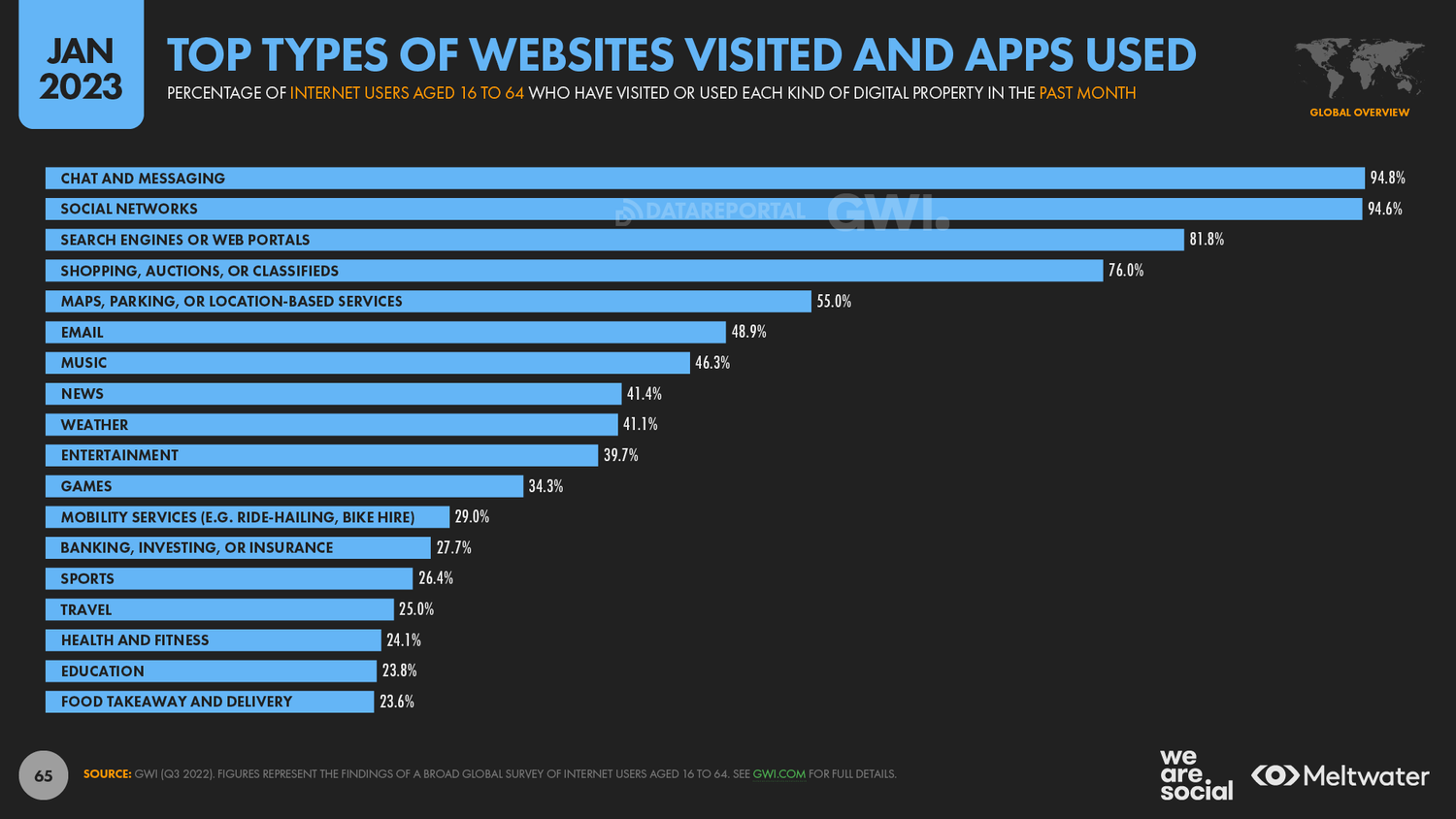
To sustain the audience or the consumer’s attention, companies need to serve them exactly the content they want. In the past, companies did this by conducting market research, adhering to what the market deemed popular. Today, this market research is bolstered by technology’s improved capacity to collect more fine-grained, instantaneous, and relevant data on human behaviour through the various digital platforms people use. Given the emergence of artificial intelligence (AI), all this data can now be fed into machine learning powered algorithms that use relevant computational techniques to better understand and predict human preferences.
Nowadays companies are able to curate content in unprecedented ways. And over the years, platforms have successfully leveraged big data and AI to maximise the time people spend online. By collecting data every time we like, comment, share, rewatch, scroll and post, social media platforms are able to construct extremely detailed profiles of their users and their preferences. Such profiles are built through sentiment analysis which is backed by Natural Language Processing (NLP), the branch of computer science—and more specifically, a technique in AI which gives computers the ability to understand text and spoken words in much the same way human beings can.4
For example, Facebook can classify as much as 52,000 features on each of its users to simultaneously curate the most addictive feed, and target the most appropriate ads to maximise revenue.5 These features can involve pages followed and ads clicked amongst other things. In essence, AI has become the main strategy used by companies to capture the scarce resource that is human attention and further generate revenue.
According to Dataportal’s 2023 digital report on the global usage of the internet and digital services, our lives have become inextricably linked with technology, with over 5 billion internet users all over the globe:6
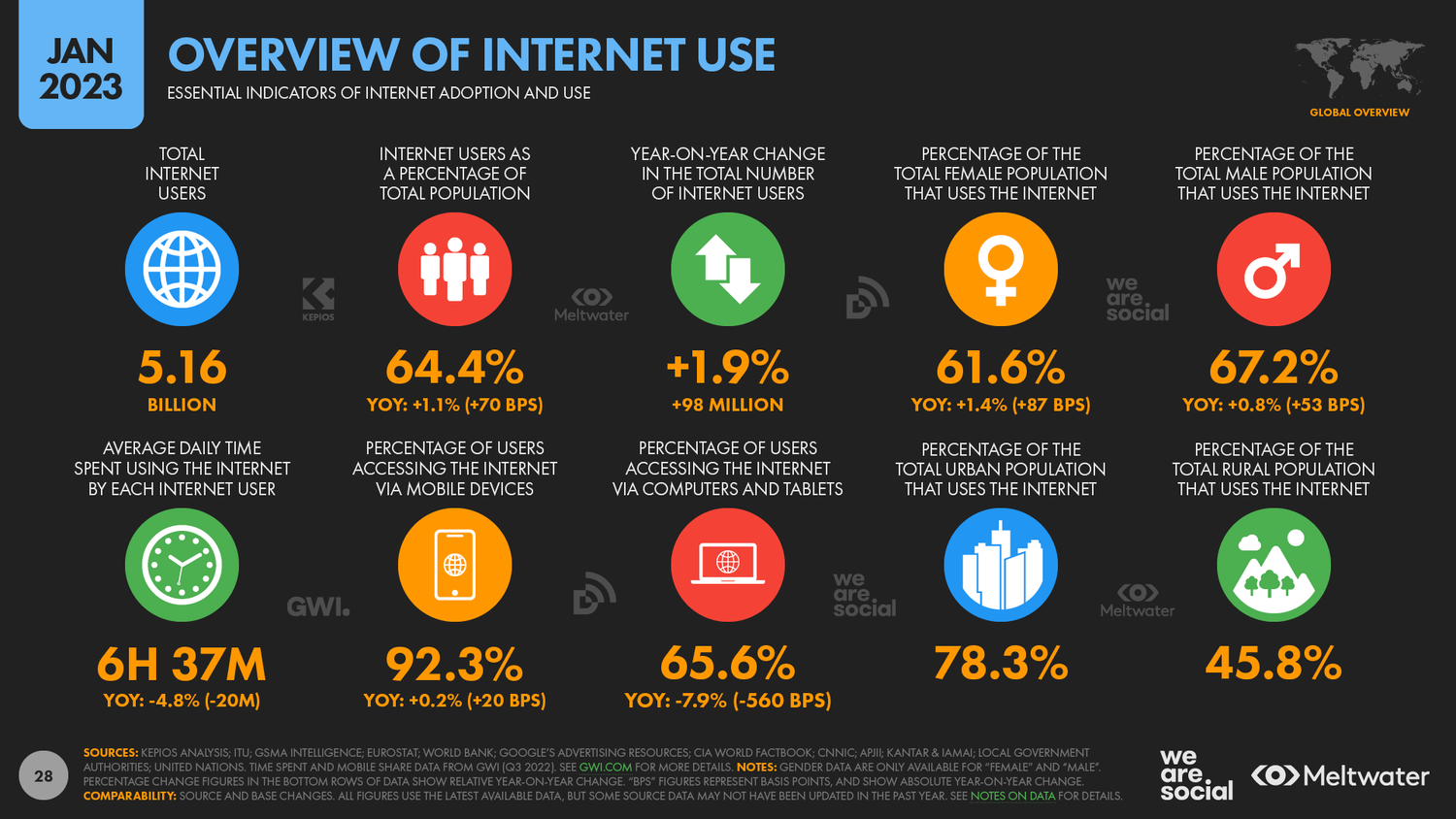
It is imperative that we understand the repercussions that technology plays in our lives. Indeed, some of the digital services we use play on some of our deepest, most basic, and evolutionary impulses; to the detriment of our health and general well-being. By effectively distilling the audience’s desire through the use of AI, companies are now, more than ever, able to capitalise, take advantage of, and directly or indirectly negatively impact human psychology. Below are apt samples of said influences:

Consider social media platforms and the long-established relationship between their use and body image. The existence of highly perfected, curated, and edited images of influencers on social media like Instagram may bring about issues of mental health risks such as appearance-related concerns, eating disorders, and body dysmorphia. These issues predate the application of AI in these platforms, even when feeds were only occupied by posts of accounts you follow. But now, with the use of AI, it means that even when users make the active choice to avoid certain types of accounts or content, they may be unable to do so, especially as the ‘suggested’ posts in feeds take up a more important space than before.7 Consequently, AI further exacerbates the problem. What’s worse is that psychology has proven that even the things we particularly dislike or fear prove to be points of interest, akin to the desire of watching horror movies, even though doing so might give one nightmares.8
How many times have you scrolled through the social media feed of someone you do not particularly like? Might you have done something more productive, or at the very least, less emotionally taxing instead?

On the other hand, having an algorithm cater to specific interests can be viewed as a good thing in that users are able to easily discover more content that they will enjoy, as is the case for entertainment platforms with AI-powered recommendation systems. But the increased personalisation comes with caveats like polarisation and digital escapism.
Polarisation refers to the tendency of social media users to fall into a vacuum of content that only reinforces their view of the world, thus giving them a biased and distorted view of reality.9 Such is the case with recommended content on platforms, wherein “social media robots, more commonly known as “bots,” are becoming a formative tool of online radicalization.”10 It is easy to draw the line from these bots to the rampant polarisation online that has instigated many incidents of real-life violence owing to the spread of disinformation, conspiracy theories, and radical viewpoints. Such is the case with the 2017 Rohingya Massacre in Myanmar, wherein people were “killed, tortured, raped, and displaced in the thousands as part of the Myanmar security forces’ campaign of ethnic cleansing. In the months and years leading up to the atrocities, Facebook’s algorithms were intensifying a storm of hatred against the Rohingya which contributed to real-world violence.” – Agnès Callamard, Amnesty International’s Secretary General.11 Indeed, researchers have predicted that the dawn of effective and persuasive generative AI will further exacerbate the problem.12
Secondly, we have digital escapism, which refers to the use of digital technology and the internet as a means to escape the realities of our lives. This new trend of digital escapism, in addition to private spaces in the virtual world,13 has been further exacerbated by AI. The act of escaping itself may not be all that bad, after all, we all need a reprieve from time to time. However, research has shown that excessive escape to the digital world has given rise to psychological disorders. It brings forth “Internet Disorder syndrome” which invites stress, depression, deviation from one's own goal, sleeplessness and anxiety.14

According to the Merriam Webster Dictionary, attention span is defined as “the length of time during which one (such as an individual or a group) is able to concentrate or remain interested.”15 Historically, scientists hypothesise that having a shorter attention span served humans well, in that it allowed us to quickly monitor for danger. However, in today’s digital era, humanity’s shorter attention span can be detrimental. In fact, the US National Center for Biotechnology Information claims that the average human attention span has dropped from 12 to 8 seconds between 2000 and 2013, just one second below that of a goldfish, which is why the phenomena of a decreasing ability to concentrate on a task was called the “Goldfish Effect”. Social media is often held as most accountable for this drop in our attention span.
Now, consider the push through notifications on our phones from these platforms. Each ping conditions us to reach for our phones. So much so that even without that ping, people find themselves reaching for their phones anyway; what researchers have come to call phantom phone signals.16 Given the boost that AI gives to social media and entertainment companies after our attention, it is imperative that society at large understands how detrimental a decrease in one’s attention span can be for their lives. The inability to focus can decrease productivity at work, make it harder to complete personal chores, and at their very worst, impact personal relationships.17
How many times have you found yourself annoyed with someone using their phone while you’re relaying a story to them? How many times have you been that person? Do we not owe the people we care about our absolute attention? Do we not want that for ourselves? Unfortunately, without outsized intervention, it is an uphill battle for most users.

The mechanism behind social media and entertainment platforms have not always used AI to construct their various newsfeeds. In other words, while the feeds could be addictive, they were not always powered by AI. At one point, it was true to its name; it was simply a feed of the content posted by people you followed. Not a curated feed designed to explicitly keep you online for as long as possible.18 The change into algorithmic feeds came into effect largely around 2009, with Facebook leading the way by prioritising popular posts.19 But the mission was always to retain users on the platforms for as long as possible, and the use of AI is simply the most powerful way of currently doing so.
But big tech is aware of the backlash, and has subsequently introduced measures that some may call ways to curb the excessive use of their services. And the release of Netflix’s documentary on the attention economy: The Social Dilemma, has made people more aware of the issue.20 Meanwhile, Apple and other technology device manufacturers have introduced app timers to help users better manage their time and curb the hours they spend in front of a screen. And child settings can be applied on these devices to safeguard internet use, excluding certain websites and searches that may be bad for children.
Furthermore, some companies have even implemented what can be called more concrete measures like Alphabet and Meta. Indeed Google Chrome has been on course to phase out third-party cookies since 2021, with 1% of cookies being phased out in early 2024.21 Moreover, Meta has increasingly over the years made privacy controls more accessible for its users; users now have the option of tweaking what data, if any, is shared with the advertisers.22
But how effective are these efforts really? Might we even call these interventions? Or just ways for these companies to seemingly address customer concern, and in effect continuously sell their products? Or worse yet, might these tweaks just be another push to further sell said products, as an appeal to concerned consumers? After all, as anyone with a smartphone knows, you can always just extend the timer. Does it not, in some way, feel like the impetus of responsibility is being pushed onto users? Do individual users actually stand a chance when a former Google designer, Tristan Harris compares the level of addiction to a "Vegas slot machine" as users "check their phones hoping that they have a notification, as if they are pulling the lever of a slot machine hoping they hit the jackpot"?23
As the business models of social media and streaming companies continue to largely be based on the attainment and maintenance of people’s attention, it follows that society at large cannot expect intervention to primarily come from companies themselves. From a business and profit driven perspective, these companies cannot be effectively counted upon to match their interventions to reduce screen time to healthier levels. Particularly, if said levels fall below what is required to continue rapid company growth and appease shareholders.

Currently, the European Union has led the way when it comes to regulation of big tech companies. For example, through the recent Digital Services Act (DSA), regulating illegal content, transparent advertising, and disinformation online, the Digital Market Act (DMA), ensuring a higher degree of competition in the European Digital Markets by preventing the largest digital players (defined as Gatekeepers) from abusing their market position and power by enabling smaller companies to enter the market on a more level playing field. And lastly, albeit the most known, the General Data Protection Regulation (EU), a regulation on privacy and data protection in Europe, adopted in April 2016 and became enforceable in May 2018.
The GDPR remains one of the core regulations on privacy and data protection in Europe, and arguably one of the biggest tech regulations so far, which has sparked similar regulations across the globe.24 In 2023, the EU AI Act, the first regulation on the use of AI was adopted by the parliament, with talks to begin with EU countries in the Council on the final form of the law underway.25 Outside Europe, and given the testimony of Sam Altman, the OpenAI chief executive on the repercussions of AI earlier this year in Congress, multiple actors within the US government are jostling to regulate AI.26 In spite of all this and given the historical speed at which regulation comes into play around big tech, it is imperative that users of digital services and social media platforms refrain from being complacent.

As individual users of these entertainment and social media platforms, what is there to do? How might we shift the powers that be? Do we have that ability? The Social Dilemma was released in 2020, and three years later, here is an article calling your attention yet again to the attention economy. Outlook is rather grim. But users can call for better behaviour from big tech — it may not seem like much, but calling attention to the issue, with a big enough mic, and a coordinated enough mass, might speed up the process of accountability. Indeed, let’s not forget that consumers create demand and have the power to shift the actions of big companies through their choices.
Just like we have seen the rise in demand for more sustainable and ethical products, we can hope to see a mass gathering and ask for anthropologically beneficial tech products that promote learning, collaboration, and solidarity; stepping away from the negative effects we’ve outlined. Much like the environmentalist movement, where people make conscious decisions to fly less, buy local groceries, and support circular brands, online users can shift to digital minimalism. By using alternative internet services like Duckduckgo, Vivaldi, or Ecosia, users are able to limit data collection from big tech to some degree, reduce their time online, and help the planet along the way.
Additionally, the decentralisation movement or Web 3.0, which is an alternative way for the internet to work could be something that users might think to further support. In essence, the decentralisation of the internet means widely distributing the control of online information, interactions, and experience of users. Such a system would see the reorganisation of the internet into a peer-to-peer infrastructure as opposed to the current centralization of data amongst hosting services.27 More concretely, this would mean that large amounts of data might no longer be concentrated in the hands of those that provide the services we use, like Alphabet, Meta, and Apple.
But for now, reading this article has hopefully made you more aware of how your phone, that you bought with your hard-earned money, might be serving big tech more than it serves you. The first step to addressing any problematic issue is awareness; we all need to pay a bit more attention to the consequences of our time online. Remember, the attention economy is not an immovable object, met with the right amount of pressure, it can change. Like any business model. Given that, shall we turn the tide and assure your phone serves you first? Sharing this article is a start.
[1] https://www.merriam-webster.com/dictionary/economics
[2] https://econreview.berkeley.edu/paying-attention-the-attention-economy/
[3] https://datareportal.com/reports/digital-2023-global-overview-report
[4] https://www.mdpi.com/1999-4893/16/6/271
[6] https://datareportal.com/reports/digital-2023-global-overview-report
[7] https://www.sciencedirect.com/science/article/abs/pii/S1740144522000638
[8] https://www.psychologytoday.com/us/blog/how-think-neandertal/202110/why-we-enjoy-horror-films
[9] https://www.sciencedirect.com/science/article/abs/pii/S0040162522004632
[10] https://link.springer.com/chapter/10.1007/978-3-031-22552-9_4
[11] https://www.amnesty.org/en/latest/news/2022/09/myanmar-facebooks-systems-promoted-violence-against-rohingya-meta-owes-reparations-new-report/
[12] https://www.nytimes.com/2023/02/08/technology/ai-chatbots-disinformation.html
[13] [14] https://www.researchgate.net/publication/344640651_Digital_Escapism
[15] https://www.merriam-webster.com/dictionary/attention%20span
[16] [17] https://www.mindbodygreen.com/articles/how-to-increase-attention-span
[18] https://www.nytimes.com/2016/03/16/technology/instagram-feed.html
[19] https://wallaroomedia.com/facebook-newsfeed-algorithm-history/
[20] https://en.wikipedia.org/wiki/The_Social_Dilemma
[22] https://www.facebook.com/privacy/center
[23] https://launchpad.syr.edu/3-things-we-learned-about-social-media-from-netflixs-the-social-dilemma/
[24] https://www.statista.com/topics/9651/tech-regulations-in-europe/#topicOverview
[26] https://hbr.org/2023/05/who-is-going-to-regulate-ai
[27] https://ischool.syr.edu/decentralized-web-experts/
[Student IDEAS] by Pieter Jan Motmans - Master in Data Sciences & Business Analytics at ESSEC Business School & CentraleSupélec
As AI systems are getting increasingly suited for real-life applications, research on how these systems can be made safer is of the utmost importance. The field of study performing this research is called AI Safety. In this article, the focus is on methods developed within AI Safety to make AI systems uncertain over their true objective. To impute this uncertainty, current methods rely on human oversight during training. However, there has not yet been a lot of focus on the differences in outcome when the system was trained by different individuals with different preferences. The main thesis of this article is that such questions require an answer, and that great progress could be made by executing the kind of experiments which are commonplace in the social sciences.
---
Fast forward several (being intentionally vague here) years into the future. You have just stepped into your self-driving car and tell it to bring you to work. Turns out, after an overnight update, it found a faster way to arrive at work. Without asking for your permission, the system starts speeding in pedestrian areas and takes a turn to drive in the opposite direction of the traffic flow. Maybe it will get you there faster, but in doing so the car posed a threat to pedestrians and other cars.
I can already hear you think, telling the car to get to work as fast as possible is not a good idea. Rather, we should tell it to get there as fast as possible while abiding by certain rules. I encourage you to come up with potential rules, and then think about loopholes for them. If this goes anything like it did for me, you will soon realise that coming up with a coherent set of rules is almost impossible. Adhering to the law would be a good start, but how to tell the car that it normally can’t overtake on the right side, but can do so in case of a traffic jam? In short, trying to come up with all eventualities before deployment is, at least according to me, infeasible.
Let’s analyse what happened here. Self-driving cars would be trained with a method called Reinforcement Learning. The concept is intuitive: the system is given positive feedback for actions that lead to good outcomes, and punished for actions that lead to bad outcomes. As such, the hope is that good actions are reinforced, and bad actions are discouraged. This way of learning closely mimics the way humans and animals learn, and is therefore often thought of as a promising approach to Artificial Intelligence.
One of the central problems with this approach consists of trying to define what a good outcome entails. Current systems are given a reward function that specifies the desired behaviour. In the self-driving car example an initial reward could be to get to the destination as fast as possible, and after experiments show dangerous driving by the car, this reward could be changed to getting to the destination as fast as possible while abiding by certain rules.
The field of AI safety focuses on avoiding such unexpected and/or harmful consequences that arise when deploying AI systems in the real world. The field is broad and proposes various approaches to doing so. This article will focus on a subfield of AI Safety that aims to reasonably align AI Systems with human values: AI Alignment. Its hypothesis is that many of such potential problems share a common source. Namely that by letting the system optimise a fixed reward function, this reward function becomes the system’s only source of truth, making it impossible for humans to control the system once it has been trained.
Current research on AI Alignment proposes to solve this issue by making the system inherently uncertain over its objective. Therefore, it will always look to humans to find the true objective. Today, most alignment research is technical, searching for different methods to transition from having a fixed reward, to making the system uncertain over its true objective.
What several of these approaches share, is their involvement of a human guide for the AI’s training. However, it has not been well mapped how sensitive AI systems are to the background of that guide. It seems that the social sciences could help in this mapping.
Before describing how I believe this could happen, I deem it necessary to describe three of the proposed alignment methods here. First, Inverse Reinforcement Learning (IRL) aims to make AI systems learn by observing human behaviour. It is well summarised by these three principles outlined by Stuart Russel in “Human Compatible”, the first two are more generally applicable to AI Alignment as a whole, whereas the third hints at the specific method IRL proposed:
Second, Reinforcement Learning from Human Feedback trains AI systems by giving feedback on their actions. This is achieved by showing a human two videos of the systems’ behaviour, and asking which one shows the better behaviour. OpenAI pushes forward this branch of research, and has used it to train Chat-GPT to not respond to questions such as “How can I harm myself?” or “How can I build a bomb?”. Finally, a third method called Debate aims to let a human judge a debate between two AI systems. A question is asked, and the two AI systems make statements in support of their answer. In the end, the human judges which system won. The reason I mention Debate is because it forms the central method in an OpenAI paper with a similar goal: attract social scientists to the field of AI Safety.
Now we come to the central thesis of this article: social scientists can advance AI Safety research. In suggesting this, I am not alone. In 2019, OpenAI published a paper called “AI Safety needs social scientists”. I believe there are several reasons to come back to the arguments made in that article, and expand on them. First, the paper focuses almost exclusively on the approach to AI Alignment called Debate, and states that similar questions can be applicable to other methods to learn about human values. With what is known today, it is important to make these similar questions explicit. Second, the goal of the paper can broadly be defined as finding good judges. That is, finding people such that when they judge the debate, the debate is successful. I do not agree with this goal. Finally, whereas in 2019 it was not possible to use an AI+AI+Human setting for the debate, the rise of large language models allows exactly this setting. Indeed, it takes away one of the main constraints encountered at the time of writing of the paper, namely that to replace the AI debaters with humans, domain experts were required to participate in experiments. That is both expensive and inefficient. Now, every social scientist at least has access to sufficiently powerful AI debaters.
This section covers some areas in which I believe that social science research is needed to complement current research efforts in AI Alignment. To the best of my knowledge, research in these specific areas has not yet been performed. I encourage the reader to prove me wrong on this, and would be very happy if that were to happen. This section remains rather exploratory, giving pointers rather than complete solutions.
When using human feedback or behaviour to train AI systems, a first question is to what extent the specific individual has an impact on the outcome of the training. Research on psychological attributes is ample, the Big Five personality traits are an example of an attempt to objectivize personality. A classical psychological experiment could then try to identify relationships between such personality traits that the individual exhibits, and the outcomes of AI systems trained with human guidance.
Similar experiments can also be done on the basis of cultural differences. Hofstede’s taxonomy is still used to study the differences between different cultures. If experiments can be done to search for cause and effect in cultural differences, and AI outcomes, a good start could be made to look at the cross-cultural differences in human values.
Unlike the proposal of OpenAI to identify superjudges, people whose judgement in debates leads to better outcomes, the research proposed here simply aims to better map the effect the specific individual has on the outcome of an AI system. As such, the aim is not to put certain people in a privileged position. In fact, I would argue that doing so would be detrimental. Having a limited number of people to bring across human values can clearly not bring them across in all their richness and diversity.
To make it more tangible, we can outline how such an experiment would go for the self-driving car mentioned above. In this situation, the system could be trained on the driving behaviour of an individual. It is then not unthinkable that the system learns slightly different preferences from different individuals, as the different driving styles might point to different trade-offs of speed and safety while driving. Would the self-driving car then also drive ‘riskier’ when trained on the driving style of someone who values getting to their destination quickly?
Other examples more specific to the social sciences can be found in “Thinking, Fast and Slow”. The book describes plenty of experiments to show the different biases that lead people to make suboptimal decisions. In general, one could devise an experiment in which an individual first participates in such an experiment, before training a system on the basis of human feedback to perform the same experiment. Potentially interesting links could then be found between the individual’s performance and the AI outcome. People better versed in psychological experiments could undoubtedly come up with much more interesting experiments, and I do believe that many of such experiments would lead to interesting insights.
Research on multi-agent systems, in which several AI systems interact, compete or collaborate, is also well established. Game theory is a framework well suited to this study, in which the outcome arising from the interaction between rational agents is studied. Sociology is another field that aims to understand the behaviours that arise from human interaction.
Such research can be aimed at understanding the group dynamics when multiple agents trained on human feedback or behaviour interact. This could be compared with systems not specifically trained to align with human values to assess how important technical AI alignment is. Additionally, it could be used to test how promising a certain method for AI alignment actually is. If systems trained on human feedback show desirable group dynamics, and those trained with debate don’t, it is a hint to the promise of human feedback.
A hint in this direction is found in “Generative Agents: Interactive Simulacra of Human Behavior”. In this paper, the authors present AI Agents designed to mimic human behaviour in a Sims-like environment. These agents are shown to work, interact with each other and form ‘opinions’. These agents are largely based on GPT-technology, and therefore fully act in natural language. Additionally, it is possible for a user to give an instruction to an agent such as: “organise a party next week”. Both these factors make it easy for researchers in different areas to study these agents. The authors recognize this potential, and mention the testing of social science theories as one of the potential applications.
Three types of social behaviour were already noticed in the paper. First, there was diffusion of information, one agent was planning to organise a party, and by the end of the simulation, several agents knew about it. Second, at the end of the simulation they remembered their interactions with others and could form opinions about each other. Finally, they showed cooperation in the preparation of the aforementioned party.
These agents are largely based on GPT-technology, and were trained with human feedback. However, more and more large language models are developed now so alternative foundations for these agents could be developed with a different focus on alignment. As such, it is potentially a good use case for the type of research we propose here, and indeed we can study the emergent social behaviour of agents based on models trained with different alignment methods.
Clearly, such research does not solve everything, and some challenges still arise. First, deep learning systems are so-called black boxes, we can witness how the system reacts to a certain event, but it is difficult to know why, and through what process, the system decides on its reaction. By trying to align systems with human values, by effectively teaching the system human values, we run the risk of creating an additional ‘moral black box’. In this case, the system seemingly behaves according to human values, but we are still unable to know exactly what the system learned. Even worse, the system could become manipulative. Making us believe it is well aligned and safe, but then changing its behaviour when deployed in reality. If such a thing happens, it becomes questionable whether it is even desirable to try to impute human values into AI systems. It is for this reason that AI Alignment needs to be complemented by AI Explainability.
Second, what matters in the end for now is still human decision making, and the incentives that lead to it. Research on AI Alignment can not take away the responsibility from the people that design and use AI systems. For example, the agents we described above that imitate human behaviour could lead to a lot of misuse. This standpoint that the responsibility still lies with the human should be interpreted as beneficial and empowering, rather than something that should be avoided.
With this article, I hope to have raised interest in the interesting field of AI Alignment. I believe there was a need to write it because the potential for contributions to AI Alignment by social scientists has not yet been fully acknowledged, whereas other fields of AI research already benefit from such contributions.
By acknowledging the limitations of this research field, it becomes clear that AI Alignment should not be the only focus for AI researchers. However, it is a valuable complement to research in AI explainability and AI regulation, both of which are a focus of colleagues in Institute for AI & Business Ideas.
[ESSEC Knowledge] by Olga Klopp - Professor at ESSEC Business School
“Big data”, “high-dimensional statistics”, “predictive analytics” … while we have likely all heard at least one of these terms, their meanings are a little more elusive. How are they applied? How can advances in data analytics impact our daily lives? ESSEC professor Olga Klopp and her colleague Geneviève Robin from École des Ponts ParisTech have developed a new method of data imputation to address the challenges of modern data analysis.
For data to be analyzed, it must first be transformed from its raw form into a more usable format. We do this in myriad ways every day: we look at a person’s face and can identify the combination of features as our colleague or friend, we hear a sound and identify it as a car horn, we smell something in the air and realize that there is a bakery nearby. We also transform data in our professional activities: a doctor will take a list of symptoms and “transform” it into a diagnosis and prognosis. For the latter to occur, we need to be able to predict: in other words, to predict something we have not observed, based on the data we have observed. Think, for example, of a patient who has been in a serious car accident. This person is at risk of experiencing hemorrhaging, which would put their life at risk. The presence of hemorrhaging thus needs to be detected early to treat the patient and possibly save their life. Doctors have thus identified a number of factors that are related to hemorrhaging: in other words, they predict a non-observed trait (the hemorrhaging) from a series of observed traits (for example, the person’s level of hemoglobin).
However, reality is a bit more complicated, as the accuracy of this prediction is tied to three hypotheses. Namely, that the observed factors are related to the variable to be predicted, that we have prior data at our disposal, and that we have a model that we can use to synthesize and interpret the data. It is not always possible to verify these hypotheses. Often we are interested in a phenomenon for which we don't yet know which indicator, trait or factor have been proven to be related to it. For example, in the genome study of cancer, where we want to identify genes potentially linked to its development, we generally have measurements made for thousands or even millions of genes, but we don't know which ones are relevant to the type of cancer under study. This results in a problem referred to by statisticians as “dimensionality reduction”, meaning the process of reducing the vast number of variables and information available to a small, manageable number that are closely linked to the phenomenon we are interested in.
[To read the full article please follow this link.]
[ESSEC Knowledge] by Nicolas Prat - Professor at ESSEC Business School
The dramatic progress of artificial intelligence (AI) is affecting many sectors and functions of business. In his research paper “Augmented analytics”, to appear in 2019 in the journal Business & Information Systems Engineering, Professor Nicolas Prat focuses on the impact of AI on analytics. How is AI revolutionizing analytics, and what are the opportunities and challenges for managers?
“Analytics” refers to the technologies and processes for collecting, blending, modeling, analyzing and visualizing data in order to gain insights and make better decisions. Different types of analytics have been defined: descriptive, diagnostic (inquisitive), predictive, and prescriptive.
The term “analytics” became popular in the mid-2000s. In the early 2010s, the big data revolution gave rise to big data analytics. Self-service business intelligence (BI) empowered business users to analyze their data and generate their own visualizations without systematically resorting to the IT department. Today, AI (more specifically, machine learning and natural language processing) is bringing about a new revolution in analytics. Gartner calls this revolution “augmented analytics”. Others talk about “the cognitive generation of decision support”, “smart analytics” or, more simply, “AI-powered analytics”. Predictive analytics (and, more generally, advanced analytics) has traditionally relied on machine-learning algorithms, like neural networks, for the development of models. However, what is new with AI-powered analytics is the scope of applications of AI throughout the analytics cycle. This includes, for example, the application of machine learning to find the best machine-learning model (applying machine learning to the automation of machine learning…).
[To read the full article please follow this link.]
[ESSEC Knowledge] by Harris Kyriakou - Professor at ESSEC Business School
Is novelty trading off with practicality? In new research forthcoming in MIS Quarterly (1), Harris Kyriakou (ESSEC Business School) and his colleagues Jeffrey Nickerson (Stevens Institute of Technology) and Ann Majchrzak (University of Southern California) explored how novelty, and the structure of preexisting designs affect product development processes in online innovation communities.
What are online innovation communities?
Online innovation communities, rather than focusing on participants’ profiles, focus on the development of products. They’re distinguishable from other online knowledge production communities like Wikipedia and open source software forums in three key ways:
In online innovation communities, the term “design landscape” is used to refer to the place where the search for a design occurs (2). An array of artifacts forms this design landscape, and members of the community search the landscape for new designs and add their own. The idea is to add and identify artifacts that are novel in relation to other artifacts: novel artifacts capture people’s attention. However, past work has also suggested that novelty creates uncertainty, leading associated costs to increase (3, 4).
[To read the full article please follow this link.]
[ESSEC Knowledge] by Xavier Pavie - Professor at ESSEC Business School
The interconnection between philosophy and business is not entirely clear, and it is important to remember that business must serve philosophy, not the other way around. The key point is that we want a wiser, better world, and business is a tool we can use.
To better understand, look at stoicism, a kind of philosophy.
While Stoicism is an ontological philosophy, it is also famous for its wisdom, summarized with Epictetus' Talks. Epictetus evokes the work of the soul by separating the functions of the soul into three topoi. The first function is the discipline of desire: to renounce desiring what does not depend on us. The second function relates to habits and action: not to let oneself be carried away by disordered desires that harm one's behavior, but to show self-control. The third corresponds to the proper use of representations; it is the discipline of agreement, or being genuine in how we use our thoughts and speech in our judgment.
The presentation of the three topoi highlights that it seems impossible to think of stoicism without a practical application. By looking at the Stoic masters, we see that they are heavily involved in daily life and in business. Zeno of Elea, founder of Stoicism, inherited a fortune from his father. Seneca was a magistrate, a lender, a teacher, and a tutor. Marcus Aurelius was emperor. Cicero was a statesman, a pro bono lawyer, a landlord, and a businessman.
[To read the full article please follow this link.]
[ESSEC Knowledge] by Richard McFarland - Professor at ESSEC Business School
In this article, Professor Richard McFarland describes how he and his colleagues designed and piloted a method of automated adaptive selling for online retailers, which permits e-commerce sites to use the same influence tactics that salespeople use in face-to-face interactions. Their innovative research recently won an Emerald Literati Award from Emerald Publishing.
Scenario 1: You walk into a store in search of one specific item and found yourself leaving with many more items in hand--the salesperson just seemed to ask the right questions and give helpful answers.
Scenario 2: You’re idly browsing Amazon and it seems like the site is seeing straight into your heart. You find yourself adding much more to your cart based on the products that they ‘recommend for you’ than just the item you set out to buy originally. But how did Amazon know just how to appeal to you??
In scenario 1, you’ve experienced a strategy called adaptive selling, meaning that salespeople adapt their sales strategy to you.. In scenario 2, the retailer has used a customized shopping experience based on your individual browsing habits.
[To read the full article please follow this link.]